
July 22 – 28
My “weeknotes” capture events, thoughts, and other items from the past week, mostly focused on work.
[1] Will 2024 be the Zoom election?
Okay, this is unrelated to work. Except it’s kinda related to what all of us have experienced since the COVID-19 pandemic kicked remote work into high gear…

With the crazy turn of events around Biden dropping out of the run for President, and Harris stepping up, fully endorsed, to take the lead, it’s clearly generated a lot of interest, since it is literally unprecedented in American history. Additionally, Democrats appear to be energized around Harris as a candidate, for one of any number of possible reasons.
But I’ve noticed something this time I’ve never seen before: Zoom is figuring into how we experience this election, and it may be more consequential than any social media platform going forward.
I’d cite 3 ways I’m seeing Zoom as a key piece of the election architecture this time around:
- Talking Head Podcast Production. Podcasts aren’t new, nor is using Zoom for them. But the volume of Zoom-based podcast production over the past month—with release to YouTube—has exploded. Every day I’m seeing more and more talking head shows analyzing the leadership change, polling data, focus group responses, the veepstakes, and more. Zoom is a key underpinning for this work, enabling easy video-based production for any size organization.
- 2WAY Talking Heads + Real Voters. Based on Zoom, the 2WAY service I noted in a prior post continues to produce new shows, some of them daily during the week. While based on Zoom (see prior bullet), this one is different. It’s a talking head format, but the Mark Halperin show deliberately involves real voters and investigates their comments and questions right alongside talking head luminaries like Newt Gingrich, Halperin himself, Joe Scarborough, and many more. This “democratization” of the talking head format is wild to watch. All powered by Zoom.
- Campaign Fundraising Virtual Events. After the Biden exit Harris famously raised over $100 million in just 24 hours, more than 60% from first-time donors (in this election cycle). Zoom wasn’t the biggest piece of the fundraising, but it has been a big part of the outreach. There have been Zoom calls to share info and promote Harris specifically to black women, white women, black men, white men, and more. The calls have included literal celebrities as an enticement to the public to attend (it’s cool to be in a call with Pink right?). Some of the calls raised money, some just raised awareness. All of them democratized participation and removed the barriers of physical participation.

We’ll see if that last Zoom option keeps going. If it does, this could lead to a more educated and energized electorate. It could also lead to Zoom shenanigans, with Zoom crashers joining specifically to disrupt the proceedings, similar to how Zoom school was disrupted in the early days of the pandemic.
If Zoom remains an effective info-sharing and fundraising engine, they might be able to lay claim to being the most important social media network this time around.
[2] How lessons from my private sector professional services work points to our public sector consulting failures
A meeting at the end of this week really highlighted a major failing we have in our technology consulting work for our partner agencies. And we have to figure out how to fix it, or more trouble will follow. I’ll see if I can briefly explain…
As a tech services group, we must work with clients to deliver projects that bring various changes forward into reality. We have to take something that is operating one way, change it, and make it operate a new way. It’s that simple. (Of course, it’s not really that simple, but I will presume you take my point.)
We’ve had a Project Management group for years in the organization, and I’m told that for many years before I arrived (5 years ago), and in the years since, it’s not been a well-respected group, as the team struggles to run projects effectively. Yes, we get things done generally, but project management is a messier-than-it-needs-to-be practice in our organization.
Since taking on leadership over the project management group about 3 months ago, we’ve been exploring why there are challenges. I’ve had a theory of the case for a while, but this Friday proved out my theory and I feel very confident I’ve found the problem. Sadly, I haven’t yet found the solution.
A basic projects framework
Allow me to bring back a graphic from a prior post. This one shows a nascent understanding of the stages of work we need to figure out. The first and last columns are general operations—the first column is the “before” picture, and the last column is the “after” picture:

The stages of work in the middle include:
- Consulting. This is where someone talks to the customer to learn more about their current operations, their pain points, their needs, etc. This is User Research on steroids. It requires understanding the full picture of the business environment, current activities, behaviors, and attitudes. Without doing the Consulting work at the front end, you risk flubbing the remaining stages, wasting your time, and irritating your customer.
- Analysis. This takes the discoveries and understandings captured during Consulting and turns it into deeper-dive plans, functional requirements, and figures out whether the changes needed are worth pursuing (is there a Return on Investment for stakeholders?). At the end of Analysis, you might kill a project request, or you might launch into…
- Delivery. This is where Project Management and Change Management live, where we take the Analysis from the prior stage and lay it all out into a plan that we can actually execute. Timelines come to the forefront. Users are involved. New software, hardware, and processes are introduced. Training happens. And when it’s all done, you end up back in Operations again, just under a new process or model.
But no one does “consulting” around here.
The Problem: No One Consults with Customers
The job of Consulting with a client belongs to “everyone” and therefore it belongs to no one. We expect some clients to Consult with themselves and bring us a plan. We think our customer relationship people should do it, but they don’t, and probably can’t. We think executives should do it, but they don’t. Or engineers should do it (but they are rarely consulted themselves). We think it’s anyone’s responsibility but our own. But even if you valiantly attempt the task, there are no templates to guide you, no standards to follow, no exemplars to mimic.
Therefore a “project” gets dropped at the feet of a Project Manager, with a timeline already attached, no definitions of success, no analysis, etc. and they are asked to “make it so.”

The private sector solved this long ago
I’ve worked in professional services a few times, and in each of those times there were teammates responsible for helping a client figure out what they needed, then they write it up, estimate the work, and present a proposal. Generally it starts with the sales rep (or account manager). They get wind of a needed change, ask questions, figure out what all is there today, then involve a “sales engineer” (or someone similar) to help suss out the requirements in more detail, then develop a written estimate. Here’s the process, in brief:
- Account manager has existing relationship with Customer, and they agree there’s a need for something to change or something new—a project is coming
- Account manager brings in Sales Engineer (or similar) to ask questions, dig into system details, review options, etc.; this is where the Consulting happens
- Sales Engineer makes recommendations, builds a project outline with phases and milestones and technologies, includes cost estimates for labor, hardware, and software, and sums it all up in a Proposal document of some kind; this is also part of Consulting because the recommendation might change based on ROI or other calculations.
- If the project is going to be really large, the initial proposal might be to run a small project that designs the bigger project.
- Customer decides whether to do it or not. Once they sign on the dotted line, the project comes back into the team for execution.
- Once the project is signed off by the customer, the project management and engineering teams figure out how to fit the work into their schedule.
- Project is run.
- Project is closed out.
Consulting, in the case above, is a mix of steps 1, 2, and 3. And in our organization, it’s not clear who does any of those steps. Most work just shows up on the project management doorstep at Step 5.
The for-profit professional services world solved this problem long ago. Because they had to. Because money was riding on the line. Without the profit motive, we’ve let this play out over years without resolution.
Discovery in a consulting session this week
This past Friday I put my Consulting skills to the test. We had a customer that has been talking to us for at least 18 months (!!!) about how to handle a situation where a lot of sensitive files are all gathered in a file server structure where the entire team has access to all the documents, regardless of their need-to-know. This is bad for a long list of potential reasons, and we were asked to help solve the problem.
Someone, back when this first came up, proposed moving all the files to SharePoint, as that would solve the problem. (No, it wouldn’t.) Then another team came along in the last couple months and said the problem could be solved in the file server itself (No, it can’t.) Bottom line: No one had sat down with the customer to really dig in and learn more.
We spent 2 hours on Friday with 8 people unraveling the mysteries of this request. And the resolution? We need to talk more and involve more of the customer’s team, because this is first and foremost a team leadership and management problem. This needs to be figured out at the human level first, technology second (or third, or fourth).
That this request was a year-and-a-half old is shocking on its face. But given that we don’t have anyone assigned to the Consulting function—and don’t even recognize what the function is—explains the whole thing. Of course it’s taken this long. Of course no one has figured it out. Everyone is solutioning before they even understand the problem—the real problem, the human / organizational problem.
We must fix this
I suspected the big blank Consulting part of our process map was a key factor in our difficulties, and this single (and pretty simple) project discussion proved it out. I could name probably 5 more projects off the top of my head that fall into the same category: jammed into a “project management” container before we even know what problem we’re solving.
Well, the problem we really have to solve is the Consulting problem. And we’ve already started down a few paths:
- We are adding Business Analysis capacity to the team. This doesn’t solve the Consulting problem directly, but it covers our Analysis gap and gets us one step closer to Consulting. To do this we are:
- Converting one of the Project Managers to a Business Analyst role.
- Hiring another Business Analyst.
- Borrowing yet another BA that’s already on a parallel team.
- We are re-mapping the “intake” process in depth, with repeated discussions and revisions along the way with multiple teams, sharing our discoveries and asking for more insights from everyone.
- While we don’t have a final plan for solving the Consulting problem yet, we know it’s some combination of account management and sales engineering (to steal from the private sector example), and perhaps some light BA work. It will be a team effort, for sure.
Honestly, the model we build won’t be ground-breaking. We may be reinventing a wheel that’s been made many, many times before. But it will be our wheel.
[3] Miscellanea
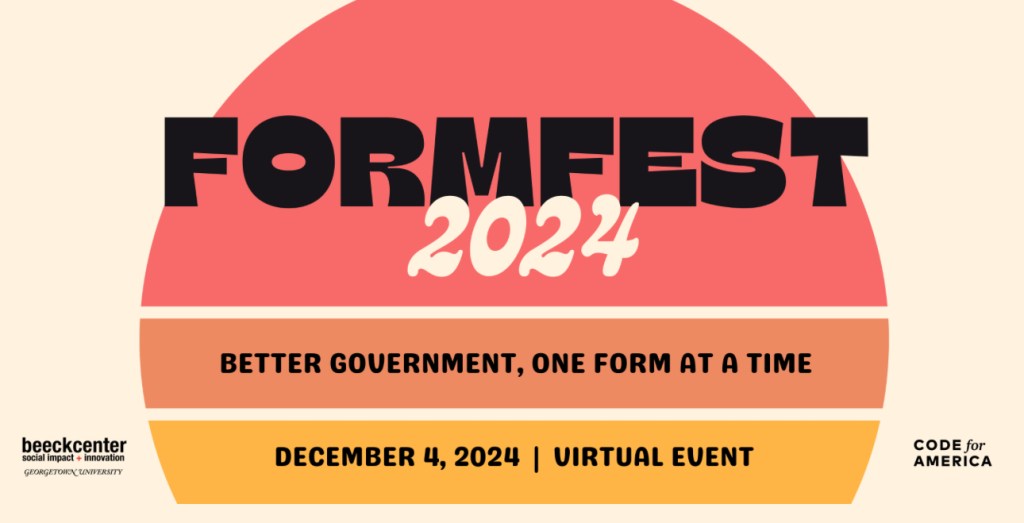
- FormFest is coming back this year, on December 4. One of our colleagues attended last year and loved it. I bet this year is even better.
- We completed our second Hack Your Bureaucracy book club session this week, with a slimmer-than-usual crew, since we have a bunch of illnesses and vacations going on. But I did get an agreement from author Marina Nitze to join us at the end of the club for Q&A!
- Most of the Delivery Services team headed out the ballpark this past week (a photo from the event is in the header of this post), which was fun. We were all in a single row, which was… not great. It made talking all the way down the line difficult. We’ll have to clump up in multiple rows in the future.
- CrowdStrike recovery kept going this week, but most of the work was done by Monday or Tuesday. It’s really just stragglers at this point. The bulk of the work—more than 500 hours—was completed in just the first two days.
[4] Watch This
By God the USGS is an awesome service. I love these people. They don’t make nearly enough videos, but the stuff they do make is either really well-done or an Earth Science nerd’s delight, or both. (Yeah, I have an Earth Science degree, alongside my English degree.) Just don’t make me choose between NOAA and USGS—they are both the federal government’s best nerds outside of NASA.
Here’s their brief explainer on this past week’s viral sensation of the geothermal explosion at Biscuit Basin in Yellowstone National Park:
[5] Internet Funnies




Discover more from digitalpolity.com
Subscribe to get the latest posts sent to your email.
 digitalpolity.com
Yep. I called it. It’s a trend. And it might change the election.
LikeLike