
July 29 – August 4
My “weeknotes” capture events, thoughts, and other items from the past week, mostly focused on work.
I don’t have a ton this week. Just one bigger piece and then some small updates.
[1] Clippy 2.0: “It looks like you’re trying to degrade society and the environment. Can I help?”
I’ve made my stance on LLM generative AI pretty clear: it’s intellectually interesting, useful in a handful of tightly-focused use-cases, but in no way lives up to the astronomical hype we’ve been hearing over the past 2-3 years.
So I was delighted to run across this thread on Bluesky that, to me, absolutely nails what is happening with the “AI industry” as it stands today. I am re-sharing it here because it’s just soooooo good. (Boldface added by me.)
The current AI industry is the new oil: they demand the right to extract resources, to pollute both the social space and the physical environment, and they claim there will be massive dividends for society so they should not be required to make safe or to pay. [link]
Essentially they are too important for small considerations like fresh water, energy consumption or the creation of millions of tiny automated lie machines to stand between them and profit. [link]
There are places where this technology can do remarkable things, notably in bio research. But what’s happening now is not the rollout of knowledge engines for the betterment of the human condition. It is the fulfilment of the stupidest prophecy ever made. [link]
The Paperclip AI was always a ridiculous bogeyman when taken literally, and always an excellent metaphor for capitalism or the fossil fuel industry. Yet here it is, actually happening. Tech companies are putting Clippy 2.0 in everything, at our cost. This is about making life into money. [link]
It is the acceleration of the shift from money being a promise to do work – an IOU – to a unit of energy consumed. The billions which will be made here are trash money: the dollar as an accounting of entropy. [link]
Daaaaamn, son. Nailed it. No notes.
We have to dial back the rhetoric on LLM-based generative AI. It’s useful for generic text production and it can be tuned to handle specific use cases that are text-based. But it’s not worth nearly the hype it’s generated.
[2] Miscellanea
- I’ll be joining Sarah Gray for a NACo webinar on Thursday, August 15 alongside Luke Norris from Granicus. You can sign up online here: Transforming County Services: From a Projects to Products Mindset – Insights from Franklin County, Ohio
- Had a great conversation with Keith Wilson at USDR this week. We’ll be working on some team structure / job description modeling in the weeks ahead. USDR also has great resources on talent practices that everyone in government tech circles should check out.
- Met with some Quickbase resources this week and brought in folks from one of our agencies that may get involved in the weeks and months ahead. It’s time we expanded beyond our own digital team to include “citizen developers” from other parts of the county to build solutions. We’re hoping to replicate—in a small way—what Washington, DC has done over the years.
- Attended a nice happy hour event on Thursday, hosted by one of our teammates. Nice to get out and chat beyond the confines of meetings.
- Also attended the Chief Digital Service Officers (CDSO) meeting this week, hosted by the Beeck Center’s Digital Service Network. Always great to catch up with that group.
- We continued our internal conversations about the global “intake” process for projects. It’s coming into focus now, but we’re continuing talks in the weeks ahead.
- Outside of work I also had an HOA board meeting this week. Yeah, I’m on an HOA board. But it’s not one of the bad ones that make headlines! 🤣
[3] Watch This
I am convinced the 1980s were the greatest single decade of pop music (and 1975-1999 is the greatest quarter-century), not just because of my age, but because musically the variety and quality of what was produced outstrips all pop periods that followed. Consider: Auto-tune was not created yet and synthesizers were simplistic devices back then, so the raw musical artistry and creativity required to make great pop music was just flat out higher.
So I’m delighted to have run across this recent cover of Toto’s “Rosanna” (1982) by some contemporary college-age kids. My hope is kids today (and going forward) will continue to discover and appreciate the pop and rock catalog from the late 20th century.
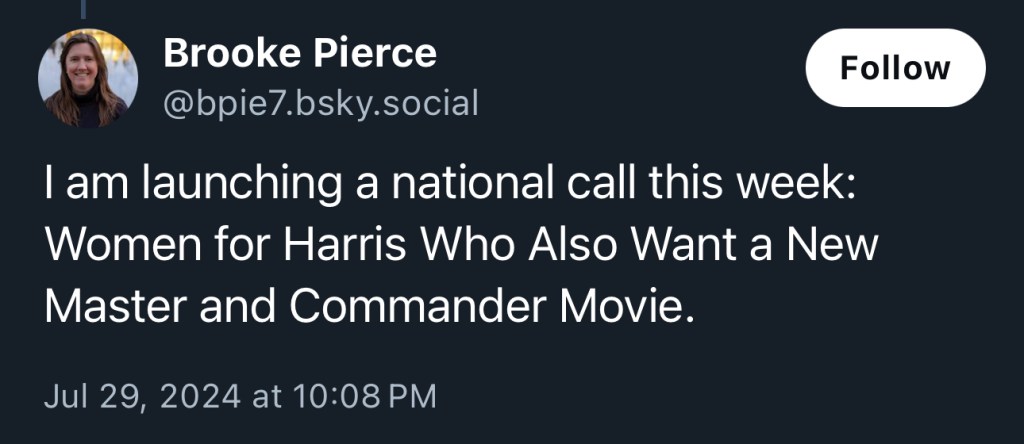
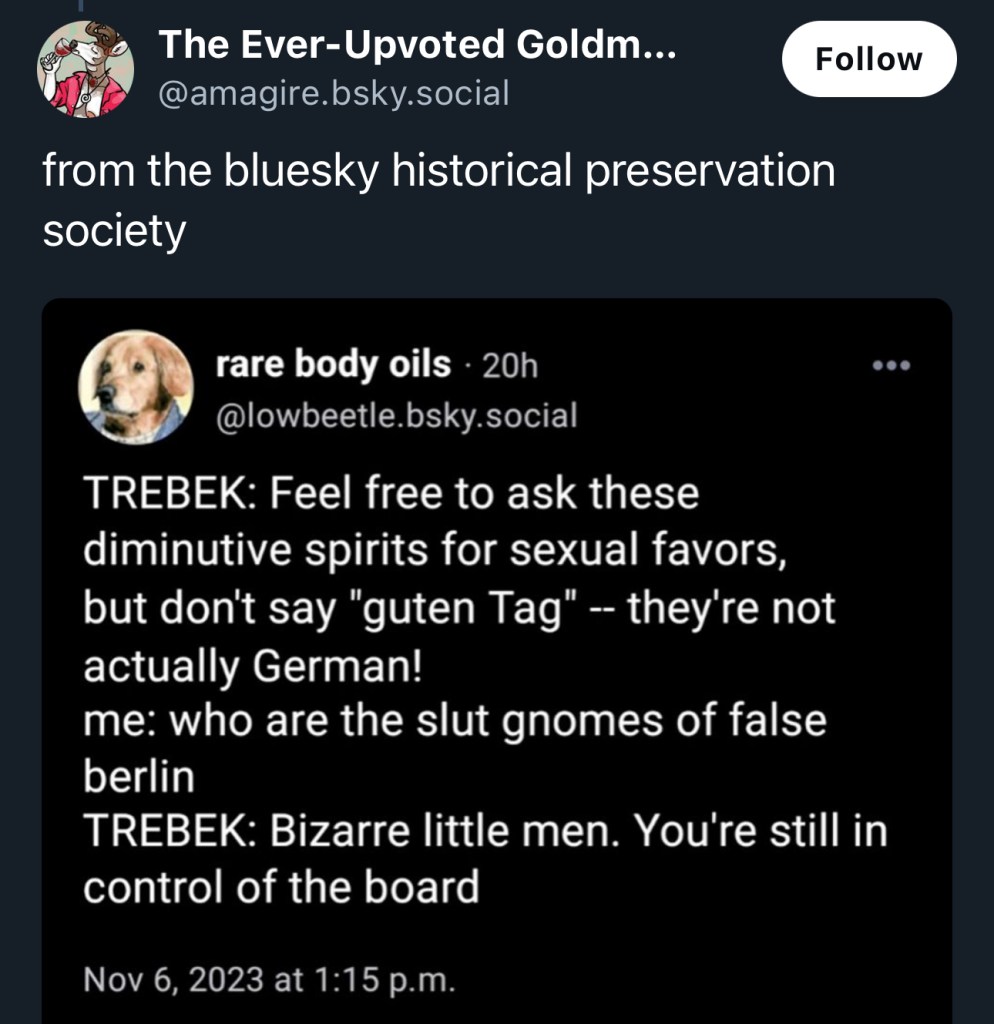
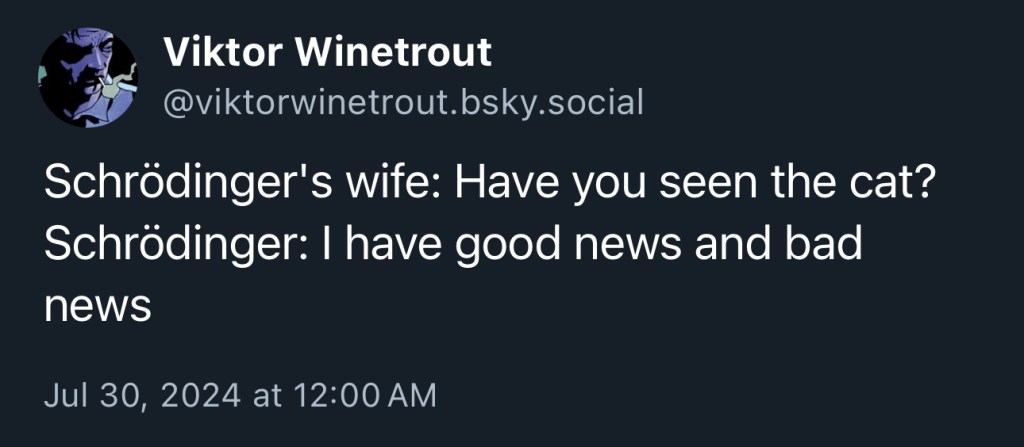
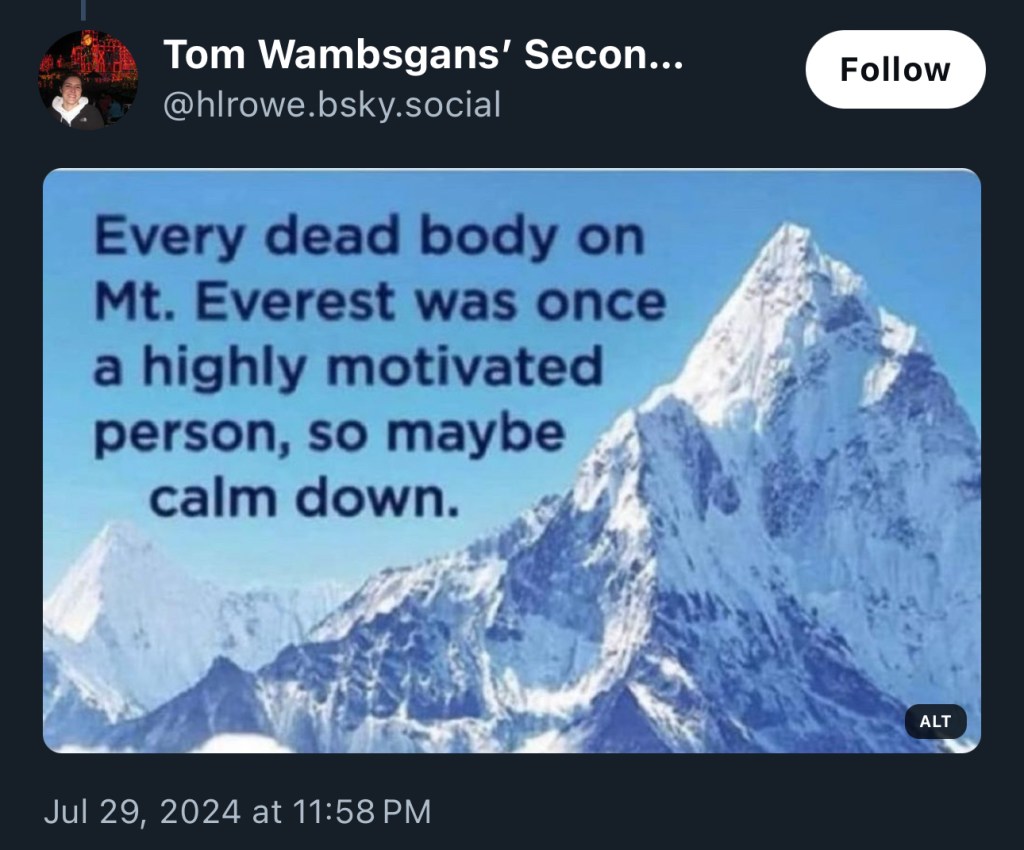
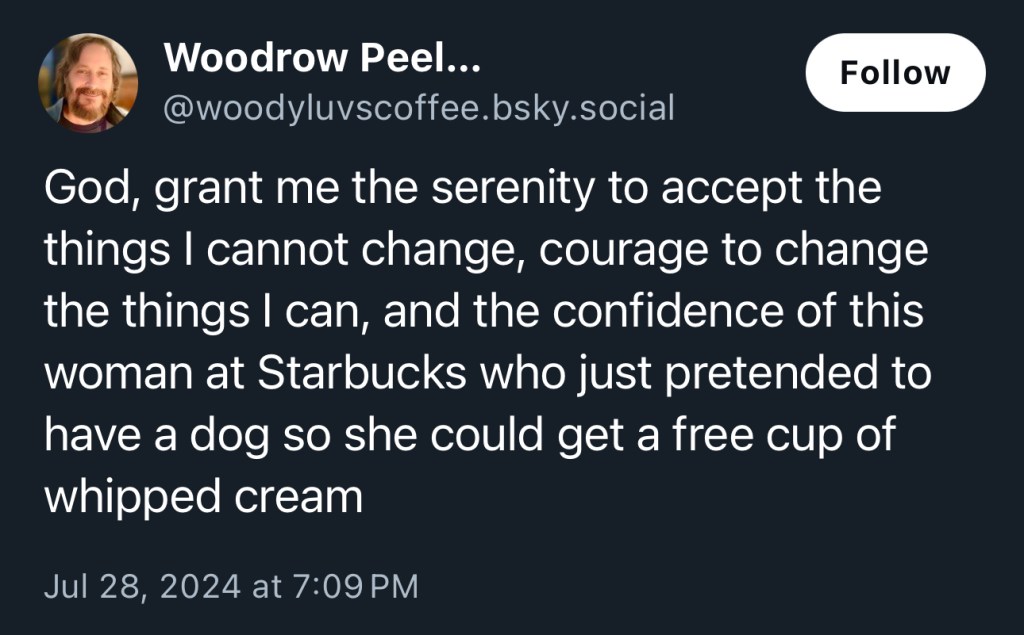
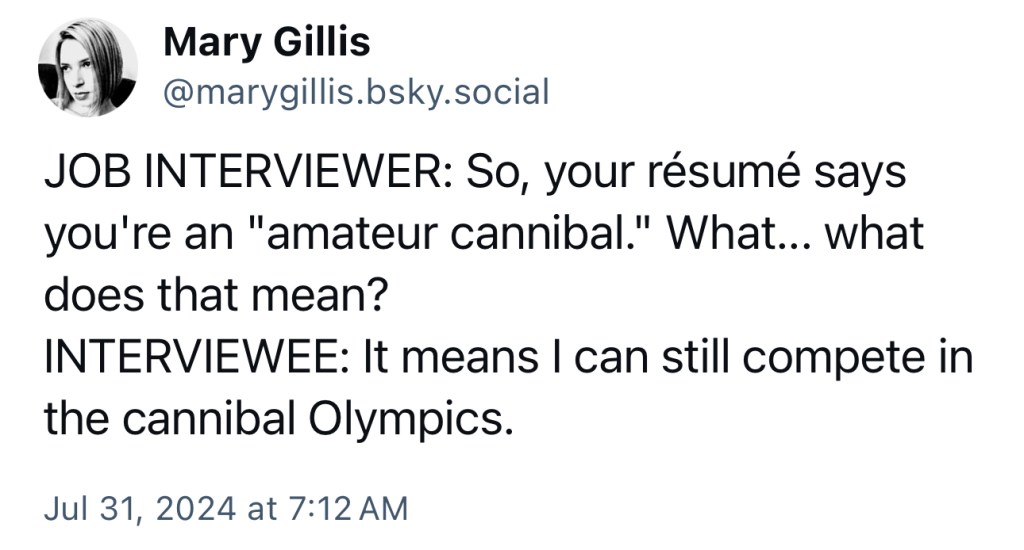
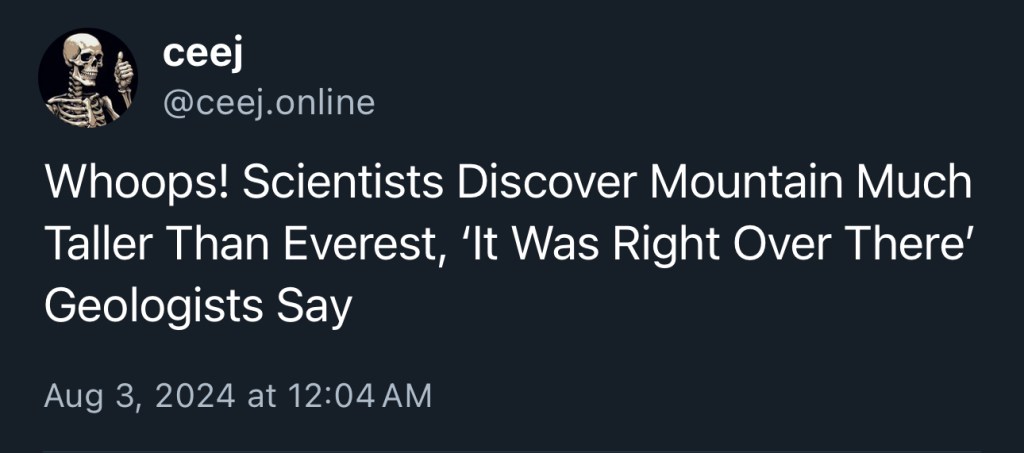
[4] Internet Funnies
Discover more from digitalpolity.com
Subscribe to get the latest posts sent to your email.
 digitalpolity.com