
November 18 – 24
My “weeknotes” capture events, thoughts, and other items from the past week, mostly focused on work. Learn more about the weeknotes concept here.
One Thought: Don’t be so defensive
A few years back a colleague of mine offered an observation about being in a management role I hadn’t heard before. A summary goes something like this:
When you’re an individual contributor, your team is the collection of your peers, and you look out for each other and advocate for your team’s success. But when you are a manager, your team of peers is the collection of other managers, not the staff you manage. Yes, you can advocate for your staff, but your primary job is to develop organization success, not exclusive success of your staff.
This gave voice to a truth I had intuited, but couldn’t describe. Managers must drive collective success, even if that means there are some individual failures of teams or staff members. Your “team” as a manager consists of other managers and leaders—they come first, not your staff.
It sounds kinda harsh and perhaps Darwinian. But it’s how we collectively succeed. The needs of the many outweigh the needs of the few.
And this is very hard lesson to learn. In part because it’s not an absolute—managers are in the unenviable position of balancing the needs of the team and of individuals with the needs of other managers and the broader organization. It’s the ultimate “stuck in the middle” job.
Don’t “defend” your team. Challenge them. Make them better.
Speaking of teams… I saw a post recently on LinkedIn that challenged managers reading it to “defend your team” against criticism, against other teams, against hardship. Turns out this is all over the place on LinkedIn. Many of these posts include a graphic similar to this one:

The post I saw had accumulated hundreds of “thumbs-ups” reactions and lots of comments, too. But it rubbed me the wrong way.
This “defend your team” stuff strikes me as wrong. Or at least it’s missing a lot of context. This is overly reductive advice. The way most people on LinkedIn appear to be interpreting this idea is focused on protecting staff from, well… just about anything, including workloads and responsibilities.
Defending your team may be necessary in a negative corporate culture, or when defending them against baseless or politically-driven accusations. But hopefully you’re not in that situation very often.
I would argue the best thing to do for team members is to articulate big aspirations and then set high, seemingly-impossible goals together. Challenging the team builds their capacity. Protecting them depresses their engagement and prevents them from growing through experience.
So please, defend only when needed. The rest of the time, ask for more than the status quo and keep challenging. Keep building.
Five Notes
- If you’re pursuing job opportunities in a federal agency right now… I don’t get it. It sounds so risky! And apparently Gen Z agrees. Looming government layoffs could spook Gen Z. Special thanks to Mark Levy for passing along this piece. And for the Gen Z folks out there wanting to make a difference, consider State and local governments instead. We’re closer to the services and the public, so you can feel your impact a lot more directly. Want to start looking? Check out my Digital Government Jobs page for links to search sites.
- One of the things we try to do in digital services is re-engineer processes that were derived from policies or laws crafted long ago. But it’s gotta be done carefully—sometimes processes are tightly tied to laws, and sometimes they are not, but you have to figure out the difference. The old saying is “Don’t take down a fence until you know the reason it was put up in the first place.” Well, it turns out that concept has a name. It’s called Chesterton’s Fence Principle. And it was created by the same guy that wrote the Father Brown mysteries. Who knew?
- I recently asked Carter Baxter (an 18F veteran now at the USDA) to share a little about how he created his DSCovery job listing website. It pulls job listings from a long list of digital government consulting shops. This started in a conversation on the Technologists for the Public Good members-only social site. He obliged with a great post on his blog: Building DSCovery. Good stuff!
- Last spring, at the Code for America 2024 Summit, Amy Martin and Caitlin Seifritz gave a great presentation on how they used training approaches with government workers to get digital concepts out there in practice. I wrote about it at the time. Now they’ve released a Medium-based post that recaps the contents of the presentation: What works in training government partners: insights and recommendations. Highly recommended. Plus, I’ll be talking with them this next week, exploring whether there’s an opportunity for collaboration.
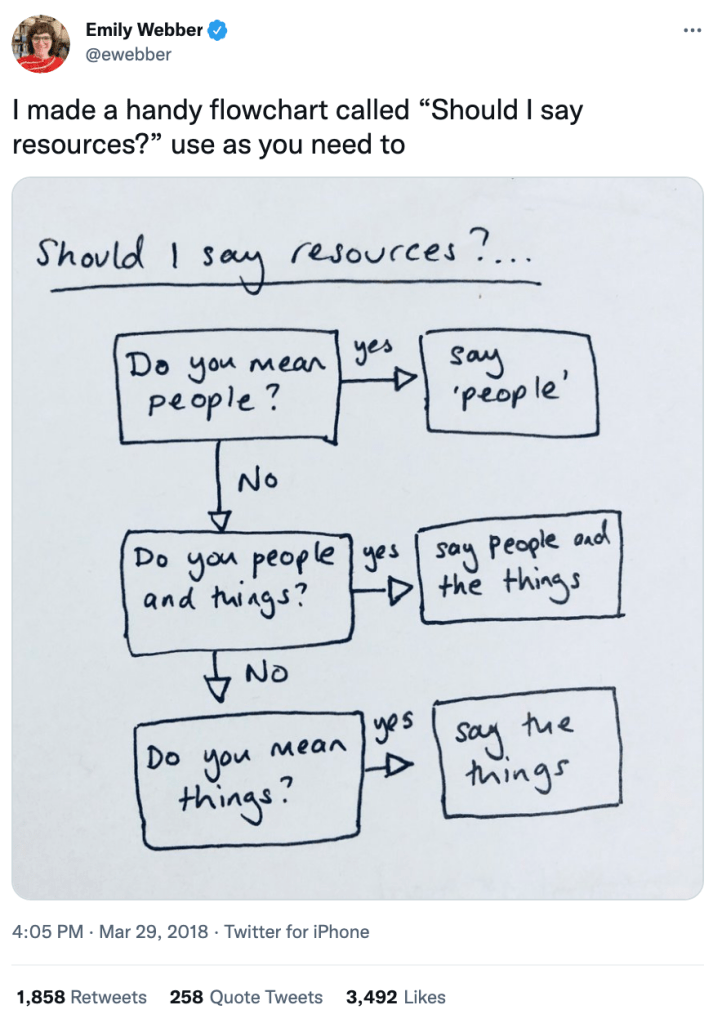
- Through some Bluesky interactions, I stumbled across this 2018 piece by UK digital thinker Emily Webber: Should you call people resources? Spoiler alert: No. She makes a good case, and it dovetails with a change we made in my organization this year. We don’t have a “Human Resources” team anymore. Now we have a “People Experience” team, because they are focused on the experience employees have as they work in our organization. Yes, they are still legal guardians of the organization when they need to be, but they lead with thinking about experience from the employee’s perspective first.
One Video: Actually, people like government services
For my colleagues in government, I can brighten your day in under 2 minutes. Bottom line: The American people do not want Musk or others to eliminate government programs, at least not when they are asked rational and careful questions. Our fellow citizens want better government; they want human-centered services aligned with the needs of the country. Yes, we all want government services to be efficient and effective. But we know slash-and-burn ideas espoused by billionaires are deeply unpopular.
Five Laughs




One Photo: Ocracoke Sunset

Discover more from digitalpolity.com
Subscribe to get the latest posts sent to your email.
 digitalpolity.com