
December 2 – December 8
My “weeknotes” capture events, thoughts, and other items from the past week, mostly focused on work. Learn more about the weeknotes concept here.
A night at the museum
On Thursday evening a bunch of folks from the office headed out to the Columbus Museum of Art for a lightly-hosted tour with Sarah Gray, our resident museum expert. Some brought family and we had a great time exploring the galleries and getting a touch of museum history and art interpretation from Sarah.
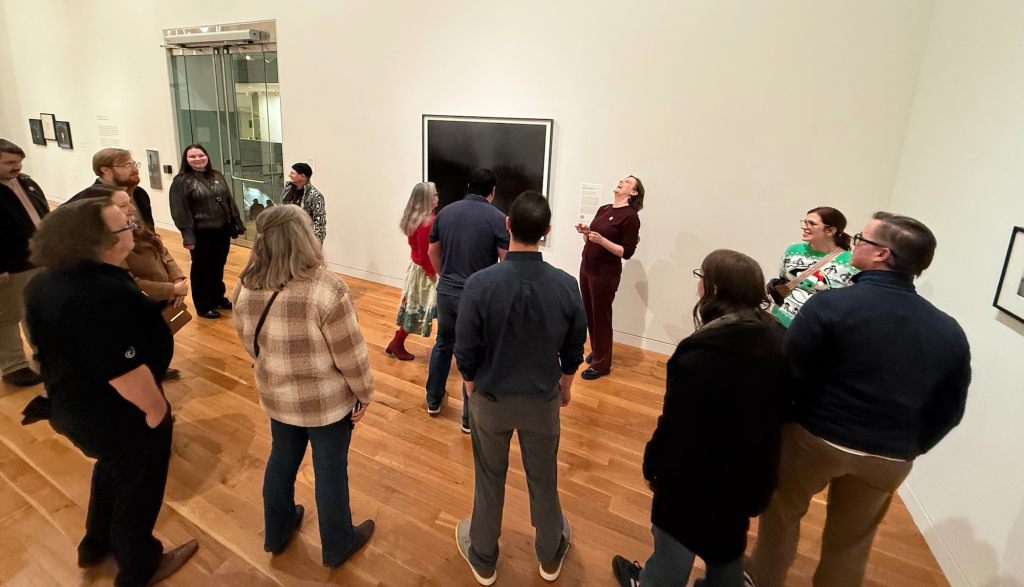
I was impressed with the museum’s expansion and renovation completed in recent years. I hadn’t visited CMOA in decades. (Although I’ve been to several others in the intervening years.) You can see where the expansion envelops a corner of the old building in this photo:

We arranged this (unofficial) outing a while ago, after I had a great time exploring SFMOMA with Sarah back during the Code for America Summit in May 2024.
Developing work culture outside of work
These kinds of after-hours and totally optional events are part of how we build and evolve our culture. Hack Your Bureaucracy might call it “doing the work of the meeting outside the meeting.” It’s a low-pressure way to build links between individuals and teams, even if it is a bit haphazard because it’s not mandatory.
Our broader organization actually has a robust series of events for employees, setup exclusively during the work day. But those don’t really do it for me.
Most of the office-driven events are… nice, but I typically skip them. First, it’s hard to break away from meetings and other commitments during the day. But additionally, they tend to be highly programmed, with a set agenda and structure. They are nearly “classes” in that sense, and as such they do not leave room for experimentation and growth of relationships via open-ended discovery and discussion.
Finally, they are less engaging because the attendees are themselves less engaged. Yes, they chose to be there, but they typically do so out of social pressures or a desire to skip out on work for an hour or so. I would argue this leads to low attachment levels with the experience itself because they didn’t have to sacrifice anything to be there. By contrast, in an optional after-hours event, folks have to give up time and even a little money to participate. You only get folks attending that really want to be there. Yes, some people cannot attend due to personal commitments, and that’s unfortunate, but those that can are a lot more engaged.
Past events, future events
Thinking back and looking forward, I’m realizing I’ve done a lot of this culture-building through completely option events, each of which have some kind of culture element:
- I’ve hosted 3 outings to Waffle House after-hours (one started at 11:00pm!). This is a “low culture,” “high kitsch” event where no one can feel like they can’t hang with the cool kinds.
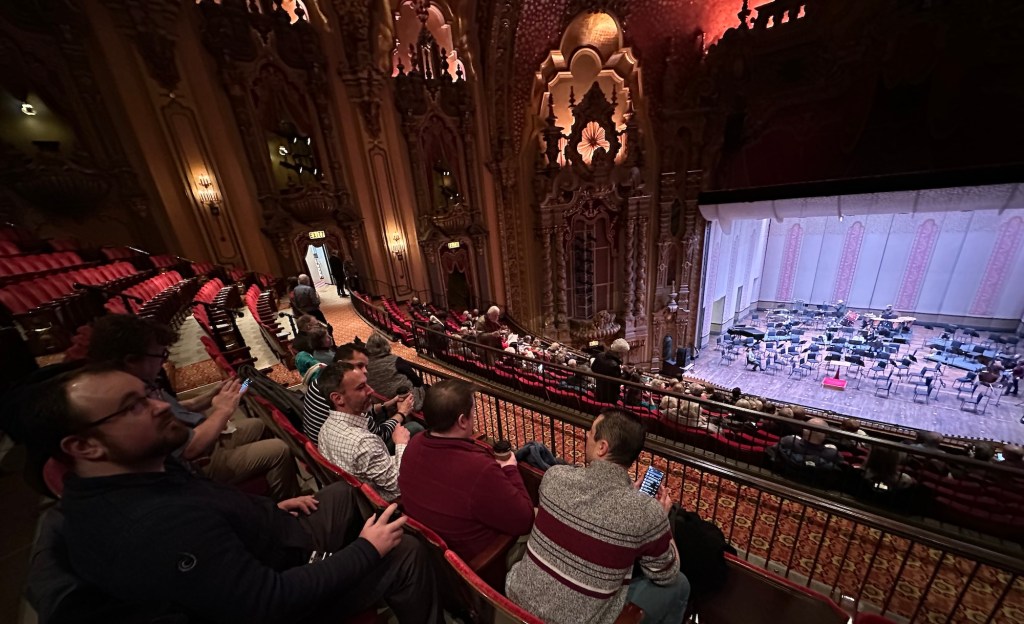
- I led a group to go see the Columbus Symphony in a rehearsal session a couple years ago. This is more challenging, as classical music is not widely appreciated. But going to a rehearsal with open seating was inviting enough and odd enough to capture imaginations.
- And then there are two visits to museums. First was the SFMOMA trip (extremely limited because there were just 4 of us at the conference in the Bay Area, yet 3 of us went), and then the CMOA this past week, which got about 20 people.
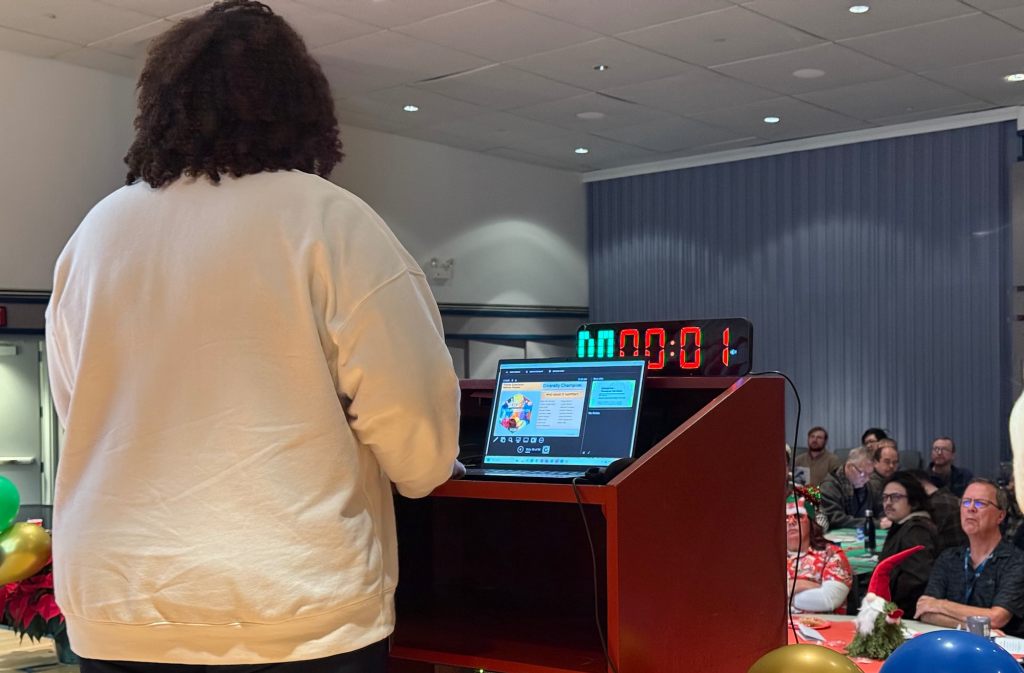
- Finally there’s one funny one — PowerPoint Karaoke, first run a year ago and coming up again in a little over a week.
I never expected to be doing stuff like this a few years ago! But I keep learning the value of building culture and strengthening the connections between everyone.
And it’s catching on.
I’ve been asked to setup another Symphony event, and a new team member has offered to host a photo walk (an awesome idea!). So those will be coming up.
Yes, you can cultivate joy on your team, too
I’ve been thinking about all this a bit more this week because of the Museum trip, but also because I listened to this repeat HBR podcast: How to Cultivate Joy on Your Team. Highly recommended, because work doesn’t have to be a frustrating slog for everyone, and you can help make it better. You don’t even have to be in charge.
Recognition Program 3.0

This week saw the third iteration of our new Recognition Program. I started the program with my team at the start of 2024, then it spread to the full organization. We first recognized work from 2023, and now the first half of 2024. For recognized work we issue Mission Patches (in the form of stickers) to participating team members, and we have established Mission Walls where a large copy of each mission patch is mounted on the wall for permanent and visible recognition, even for new team members.


This whole thing started a year ago and I stole the idea from other digital service teams around the world, but particularly in the UK.
Recognition Program and Mission Patch rules
In summary, our program now runs like this:
- We issue Mission Patches twice per year, looking back at the first half and second half of the year to call out accomplishments.
- Patches are issued to 2 or more people — no solo awards (this is not a popularity contest).
- Staff managers create the award nominations, their leaders review and approve.
- Everyone that participated on a project with a measurable amount of time put in on the work is awarded the patch.
- Patch designs are now done by a loose design team that takes input from the nominating manager and develops a unique design. They use Adobe Express and work to ensure the designs are distinctive but will also print well and be readable at small sizes.
- Designs must be bound inside a hexagon shape that stands on one of the vertices. This allows the awards to be pieced together in unique patterns on walls and other surfaces.
- Individual patches are roughly 3″ x 3″ and wall patches are roughly 8″ x 8″; they are custom-printed stickers we send out to a third-party printing service.
- Mission Patch details are stored in Confluence for later reference.
- We hold an all-staff ceremony to announce the awards twice per year. We’re generally aiming for March and September.
- Our chief executive picks what he thinks are the “most impactful” and raises them up to a top-tier award with a physical challenge coin he can hand out to participating staff.
It’s been a lot of work to get this going, and thankfully our HR team has taken on ownership to drive it year-round going forward. I could not have done it for the whole organization from my position. So far, so good, and my hope is everyone is enjoying the recognition and the creativity!




Intel is struggling, and central Ohio may be left holding the bag

Intel started construction on a massive new chip manufacturing facility here in central Ohio a few years back, with projected go-live now sometime in 2028 or 2029. But… I’m increasingly worried this may never happen and we’ll be left with a huge piece of land littered with half-finished buildings and empty roads. Why?
- Intel is losing money
- They fired their CEO
- They have no discernible mobile chip strategy or products
- They have no discernible AI chip strategy or products
- Intel’s competitors are out-innovating and out-performing them
It’s looking like Intel is about to be added to the pile of companies that ignored Clayton Christensen’s laws of innovation. Indeed, Apple observer John Gruber called out the past Intel leadership of Andy Grove, who advised business leaders to stay paranoid: Andy Grove Was Right. That’s a really great piece, with a quick history of innovation in the tech industry, cataloging the fall of IBM during the rise of Microsoft and Intel, and now the fall of Intel with the rise of ARM + Apple and NVIDIA.
Meanwhile, in Ohio…
Every week I read articles from Columbus Business First for the local reading service that provides programming for the blind and visually impaired. The business press coverage of Intel’s arrival in central Ohio has been breathless and relentless. It’s played as the most important project in the region in, well… in history. Nothing can compare, to read the press.
In the face of these Intel revelations — like Intel’s chip manufacturing business itself will be sold off — the optimism remains. Federal funding was released earlier this month, so that’s good, right? Intel lost their CEO, but it won’t be a problem, right? Intel fired 15,000 people already this year, but no worries, the free coffee and tea is back, so it’ll be fine. Okay.
I struggle to see how this ends well for our not-even-half-built manufacturing facility. Chip manufacturing can be a profitable business, of course, and we obviously need these capabilities inside the United States. It would be great to have it here. But the rapid decline of Intel—not easily reversed—and the chaos of the likely fabrication facilities sale cannot end well.
Godspeed, Ohio One. I hope you make it.
Don’t get me started on healthcare in this country
Yep, the UnitedHealthcare CEO was gunned down on the streets of New York City—literally—this week. The manhunt, the surveillance footage, the breathless reporters, the Reddit brigade figuring out which make, model, and even the edition of the backpack he was wearing, plus all the jokes and comments… it’s been a whirlwind. Even podcasters like Kara Swisher and Scott Galloway went off on anyone that would make light of the murder because… reasons! (Easy to wag your finger at the plebes when you’re a self-insured millionaire.)
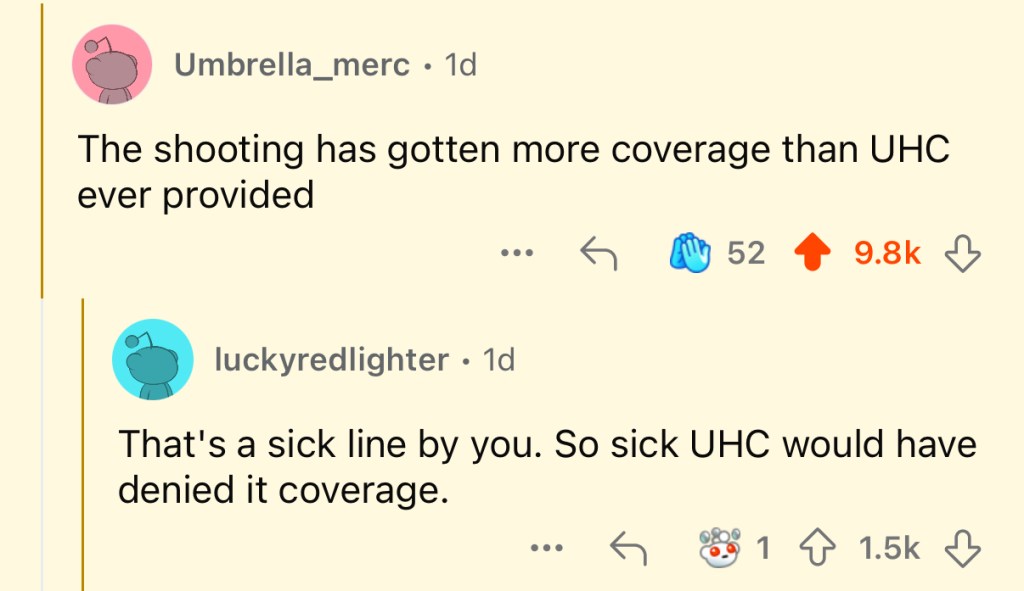
For years I’ve had a plethora of rants stored up about how we do healthcare so poorly in this country, and those rants were made worse by a positive interaction I had with healthcare in Belgium in 2018 that was revelatory. I knew it was bad here in the U.S. but I didn’t realize just how bad until I saw a system that was part heavily-state-funded, and part commercial. I’ve also worked in the healthcare sector a couple times and I have… thoughts about that.
Well I’m not dragging out my rants here, as I don’t have the time or the energy to go into it, but I would point out this very unique perspective shared on Bluesky:
Oh the irony. If we just took the profit motive out of human suffering, the “man” (I use that term loosely because what kind of a man presides over such an enterprise?) killed this week could have lived and done something better with his life. Like closing orphanages, cattle rustling, or some other Scooby Doo villainy.
My only hope in all this mess is that this UHC CEO murder opens up useful dialogue about the obscene gap between rich and poor and we start to fix it (as we have before in this country). But I’m not holding my breath.
Not all heroes wear capes
Finally, a video I stumbled across this weekend.
Look, I know Hazard, Kentucky is out there on the frontier, so I’m not surprised the local police chief is both self-important and ignorant of basic Constitutional rights. But what surprised me was this local man that had the cojones to not only make a public records request in person, but to film it and capture his own illegal detention. He even makes the smart comment, “Just because you ask questions of your government it doesn’t make you a ‘sovereign citizen’ or anti-police; you can support the police and still ask questions of your government.” Amen, brother.
Turns out he runs a YouTube channel that focuses on news in rural Appalachia. So yeah, it’s a little bit of a journalism stunt. But there would have been a non-story if the local police understood they serve the public, not the other way around. A tip of the hat to this local hero.
Discover more from digitalpolity.com
Subscribe to get the latest posts sent to your email.
 digitalpolity.com