
June 30 – July 6
My weeknotes capture events, thoughts, and other items from the past week, typically focused on work. Learn more about weeknotes here.
Professional weeknotes
- It was a 4-day week due to the July 4th holiday on Friday.
- It was also a 3-day week (in the office) because downtown Columbus becomes a combat zone on July 3rd every year as the city prepares for hundreds of thousands of people attending Red, White, and Boom—the fireworks extravaganza on the riverfront. So everyone was remote for Thursday.
- Tuesday was spent in an all-day leadership development session hosted by Business of People, a consultancy based in Ohio that has worked with our leadership and management groups for the past couple years. They do a really good job, although I’m not sure we’re the best customer. Our limited training budget means we try to DIY our way through development and I’m sure it’s not as effective as direct, individualized consulting. Still… it’s good to get all our leaders a common development vocabulary, and BoP’s material is really solid.
- I met briefly with our volunteer team from USDR this week to talk through their recommendations around team and org development, mostly focused on the GX Foundry. They had some good stuff, and I owe them a reply. From here we will narrow their focus to just a couple items (so they aren’t overwhelmed with analysis work and we aren’t overwhelmed with recommendations). The volunteer team has been so generous with their time—I’m super-thankful we’ve had this opportunity to chat, and looking forward to what we do together next.
- Sadly, the USDR meeting forced me to leave a really interesting discussion on a proposal we’re developing for the county’s Internet Crimes Against Children team. (And yes, that scary title describes what they work on—tracking down and arresting folks that use the Internet to prey on minors. And they are very good at it.) The team just needs more tech infrastructure to improve the speed and scale of their operations, so we’re advising on some options. I’m hopeful we’ll have a solid proposal shortly and can help them get whatever funding they need. They are doing some of the best work law enforcement can do, and we’re honored to help out, even a little.
- I joined our Delivery Services team for a lovely little team breakfast this week at The Mercury Diner in downtown Columbus. Always great to get to know colleagues a little outside of work. My thanks to the organizer (who shall remain nameless since I didn’t get permission to use their name) for putting a series of breakfasts on the calendar for the team!
- We’re prepping to make a pitch for more funding for the unified website project called One Franklin County next week. Definitely nervous about that. While it’s not literally a one-shot opportunity, it’s a rare opportunity to sit down with a mix of county leaders and ask for expanded and perpetual funding. But if we don’t get it, the dream of making digital life better for citizens and staff will be dimmed a bit. There’s only so much we can achieve with a shoestring budget.
- We changed out our payroll-related timekeeping system this week. That threw everyone for a little loop, especially during a holiday week. But we’ll be okay. The old system was bad. The new system is “meh” — but that’s actually a big improvement!
- We’re still struggling with how to handle workflows through the organization, trying to address all the little ways work gets brought in, then tracked and handled, then finished. Truth is we’ve made big strides in the past year. But we’re always focusing on the next thing to fix, the next exception, or the next frustration.
Professional links and references
I’ve been out of the serious weeknotes game for a while so it feels like l have pent-up stuff to share, but honestly most of this stuff came to me this week. So let’s get to the other stuff you should see…
“The power, peril and privilege of working in the open” — Matt Jukes
One of my favorite bloggers in civic tech has been working in the open for so long he has a lot of insight to share on open work, which he did at a recent conference in the UK. I couldn’t see that talk, but he shared a version of his “script” from the talk here. Recommended. I was particularly interested in the “perils” part, as politicians, or the politcally-minded, can definitely see open work and open sharing as a potential threat to carefully-crafted narratives or image-making.
In that talk, Matt pointed to something I hadn’t seen before (and needed to see) — the Retrospective Prime Directive. While this was written with agile development teams in mind, it also applies to folks working in the open. As Matt notes in his presentation, there are perils in sharing openly, and one of those risks is sharing in ways that may offend. It’s very easy to armchair-quarterback in weeknotes or blogs. It can even be satisfying to pick at something (or someone) that’s bothering you. But that cannot be the goal and indeed should be avoided, just like interfering with another culture is forbidden in Star Trek.
“Regardless of what we discover, we must understand and truly believe that everyone did the best job they could, given what they knew at the time, their skills and abilities, the resources available, and the situation at hand.” —Norm Kerth
I need that Prime Directive.
“Blood, Sweat, and Roadmaps” — Maarten Dalmijn
I needed to see this. As I’m gathering the GX Foundry team in the coming week, roadmaps—or planning for the future—is top of mind, and this post summarizes a lot of stuff I’ve struggled with for a few years now. One insight hit home. Maarten notes that when an organization fails to make clear strategic choices of where to focus time and energy, it’s…
…immediately noticeable for the people that do the work. They’re pulled in a thousand directions and spread too thin. The leadership team doesn’t experience the self-inflicted cannibalization and simply thinks: why are they not working harder to make it work?
To some degree, any service organization has this problem—where do your services end? Where do you draw the line, so to speak? But it’s felt like more than that for me.
My goal in the days ahead is to articulate a strategy for the GX Foundry that feels do-able or achievable. There’s effectively infinite work for us out there, fixing government experiences one digital system at a time. But we have a small team and can’t boil the ocean. A narrowed strategic vision will be crucial to build.
A great little video on what AI can and can’t do
It feels like “AI” is the bane of my existence. It’s everywhere, always being discussed, and 9 times out of ten it’s talked about like it will wipe out white collar jobs like Ebola. Nah. It’s not talked about “as if” it will wipe out huge parts of the economy, a lot of idiots are talking about it like that’s already happening.
But it’s not. Not even close. And it’s not going to.
So any video that comes along that talks about how AI tech will have some impact, but nothing catastrophic, I’m down for it. And this is one of them.

In the video there’s a distinction made between predictive and generative AI, and while I can appreciate that technically, the reality is generative AI is predictive, it’s just with language or other models. That is, ChatGPT is stringing together statistically-significant words and phrases to give the illusion of intelligence.
What I appreciate most, however, is the fact that the speaker talks about how AI isn’t actually useful unless you change some kind of concrete process. That is, it makes no impact if you don’t make a change because of the tech. This is the same argument I’ve made around data and KPIs for years—don’t collect the data unless you plan to use it to change a behavior. You job isn’t to “observe” reality, it’s to change it for the better.
Anyway, the video is only 8 minutes. Give it a watch.
“Hire Great Writers” — 37signals
This podcast episode (just 11 minutes!) goes back a couple years, but the advice is timeless, especially for knowledge work businesses today. You need to hire great writers.
This hit home for me again recently. In our service-focused knowledge-work organization, hand-offs and collaboration between teams are critical. No one can do the entire cycle of a job for a client by themselves. I mean, if you’re a one-person consulting shop then sure, go solo. But beyond that, hand-offs are essential.
And for me, those hand-offs are best done in writing. Because writing is asynchronous, portable, can be referenced repeatedly, and developing written material that conveys meaning and context requires the writer to really think things through first.
As my father taught me ahead of my sixth grade science fair: you don’t really understand something until you can explain it to someone else. And writing gets at that truth really rapidly. You either understand what you’re talking about and can explain it to others, or you’re just dumping words on a page, hoping the next party can piece it together.
This reminds me of a truth I’ve held dear for a long time: “Teamwork” is about making someone else’s job easier. If you’re not making the next person’s job easier, you’re not a team player.
In the interests of the Prime Directive (noted above), I can’t get into specifics. Just know that hiring “writers” is crucial, and not just in the abstract.
(By the way, I disagree with the 37signals leadership team about the importance of cover letters in job applications. But that’s another topic.)
“Do you want to be right, or do you want to be effective?” — Scott Galloway
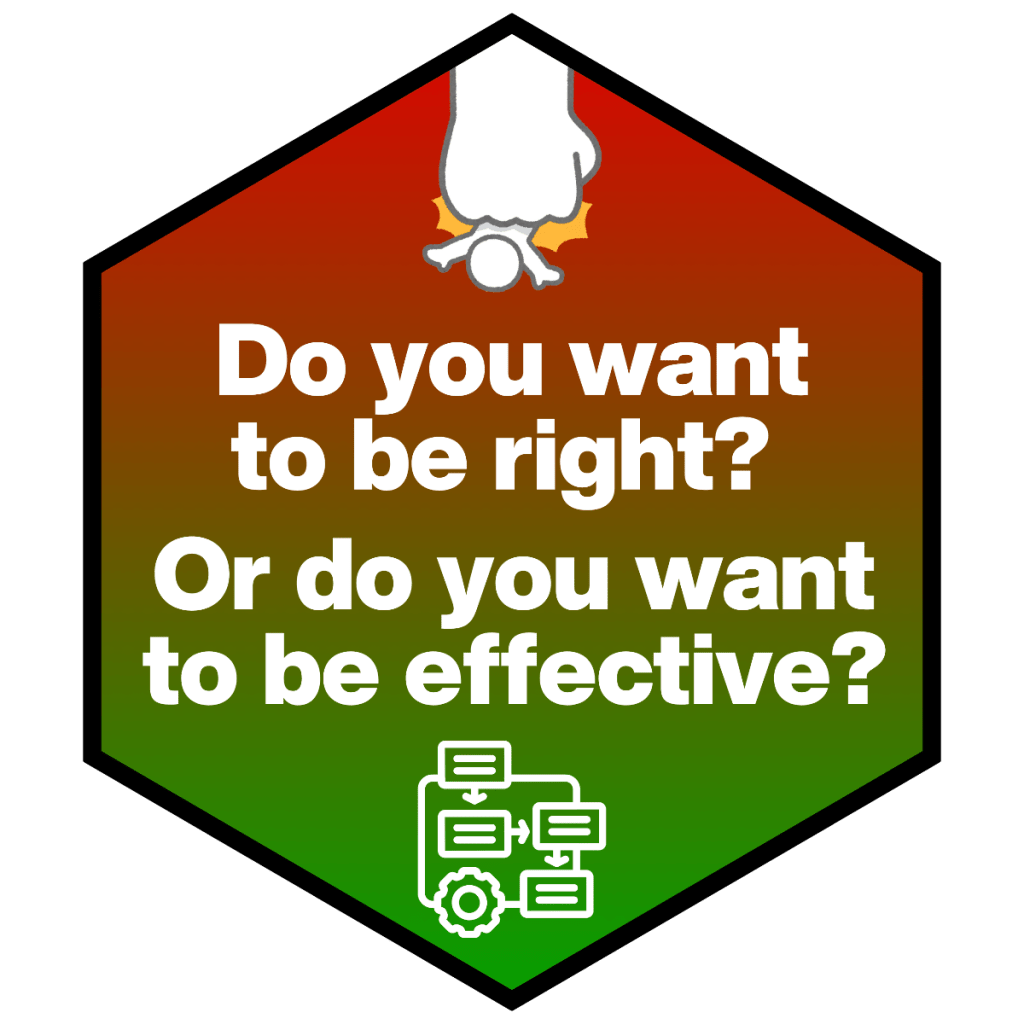
Over the years of listening to the Pivot podcast (don’t judge me), co-host Scott Galloway (again, don’t judge me!) has made one particular observation several times. But only in the last couple months did it really land for me. His question: “Do you want to be right, or do you want to be effective?”
A simple enough question, but one with major implications for this age of social media and hot takes. Because boy is it easy to be “right” (in your own mind) and then scoff at the world as it is. If only people listened to me! If only I were in charge! It sure is fun to be right. 😏
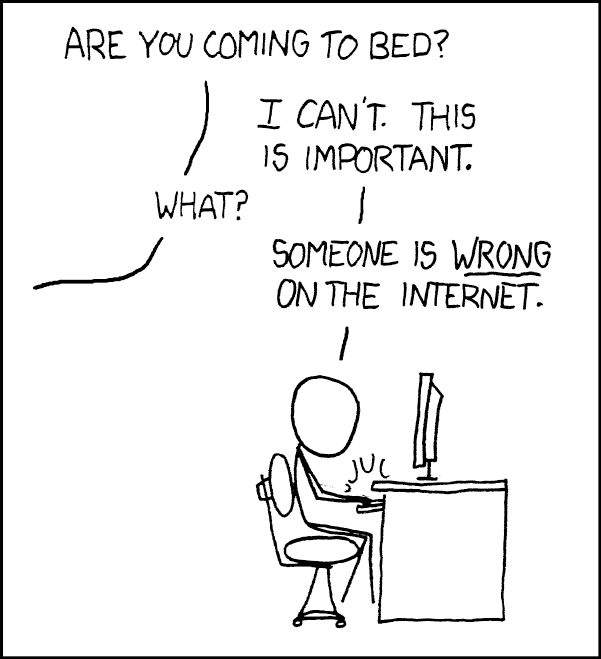
But our job—my job, too—is not to “be right.” That’s not why we were hired (no matter what your job is). Yeah, maybe we were hired because we had good instincts or enough experience to have valuable insights. Leaders are often selected because they make more right calls than wrong ones.
However, we were all hired to get things done. We were hired to be effective. Efficient would be nice, too, but really effective is the goal. Effective at making changes.Effective at making a difference. Even consultants that are paid to “be right” for customers, offering good advice, still have to be effective at communicating their ideas to get buy-in from their customers.
Sometimes being “right” can help make the case for why you want to do something (to be effective), but being right by itself is useless.
But there’s more, and I hope to talk about it with my team in the days ahead. Because this right / effective split also impacts team and organization culture. I’m worried that we’re enjoying being “right” in comparison to our peers. Believe me, feeling some temporary righteous rage can be cathartic. But it can set you up for an us/them split that widens gaps between teams and makes collaboration harder.
And if collaboration is harder, you’re less effective. And so are your partners.
Autonomy, Mastery, and Purpose (from “Drive”) — Daniel Pink
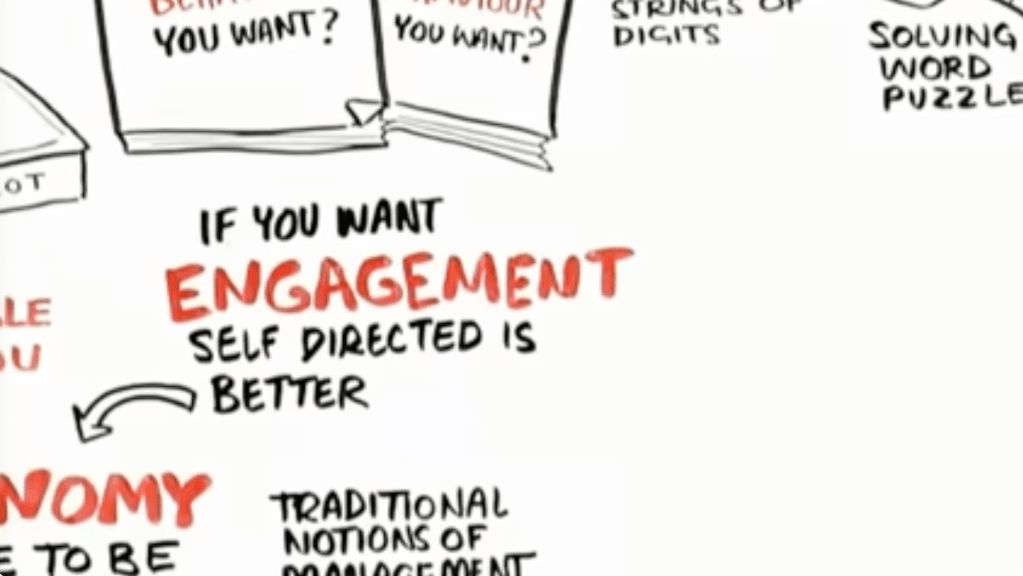
I referred to the now-15-year-old Daniel Pink talk about autonomy, mastery, and purpose as motivators for teams working on complex, creative endeavors (everything we do) in a brief talk at a recent GX Foundry staff event. I plan to talk more about this soon with the team, but for those that haven’t seen this video or heard the ideas before (or just want a refresher), definitely check out this 10-minute animated video on the core concept.
Personal weeknotes
This week marks the 3rd or 4th in a row with some kind of unexpected disruption to the weekend. Every week I want to “catch up,” yet family matters intervene, especially in the wake of a recent hospitalization for my mother, who also suffers from moderately-advanced dementia (which just complicates everything). I’ve already talked about some of that stuff here. But this long weekend was disrupted because we welcomed a new cat into our home on Saturday.
This cat has—until this weekend—belonged to my aging parents since sometime in 2017 or 2018. So he’s probably 8 or 9 years old. And his name is Noah.
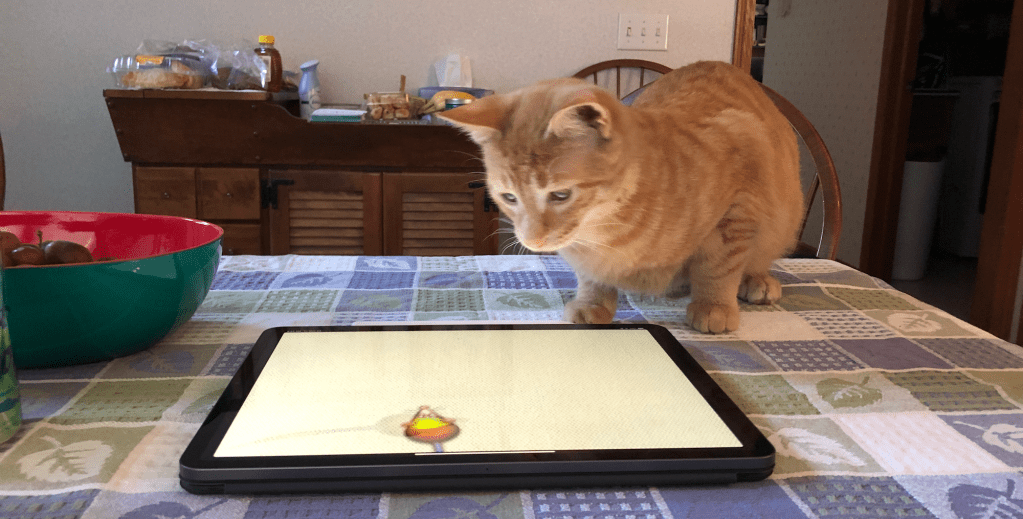
My father is trying to take care of my mother and the house and so forth, and of course it’s a struggle. They live 2.5 hours away so we can’t assist day-to-day. They are looking at options for assisted living, which is great. But the cat remains a distraction for my Dad because it’s just one more thing to hassle with while handling physical therapy visits, nursing visits, looking at potential moves, and just thinking through a change I think he thought he could avoid.
So… we have another cat. And he joins our existing cat (Inigo) and dog (Whisky), which is… a challenge. We’ve locked Noah away behind a closed door for this coming week and we’ll get him to our vet for a check-up. We’ll improve his food quality, groom him and clean him up, and hopefully integrate him into the house with the other pets—if everyone plays along. If that doesn’t work, we’ll have to find a way to re-home him locally. Ideally we’ll just keep him, but sometimes animals don’t get along.
So far, he actually seems kinda chill and kinda thankful to be in a more interactive environment. But time will tell how this all plays out.
Anyway… that’s where our Friday and Saturday went—prepping the house for a new animal and then hosting my parents for their visit. We’re glad we can help, but losing weekend after weekend to unplanned family matters is messing with me.
And there may be more to come. My parents are leaning toward moving into a nice place down near my sister in Tennessee, leaving us with a cleanup job in Toledo. That would actually be a positive development. I just hope it’s not a surprise—I want time to plan.
About this week’s header photo

Discover more from digitalpolity.com
Subscribe to get the latest posts sent to your email.
 digitalpolity.com