

April 14 – 20
My weeknotes capture events, thoughts, and other items from the past week, typically focused on work. Learn more about weeknotes here.
Counting down the days
Three things are coming up in May that have me counting down the days:
- Heading south to stay on Ocracoke for 2 weeks on May 2 (12 days)
- We’re soft-launching the new One Franklin County website on May 14 (24 days)
- Code for America Summit 2025 starts on May 29 (39 days)
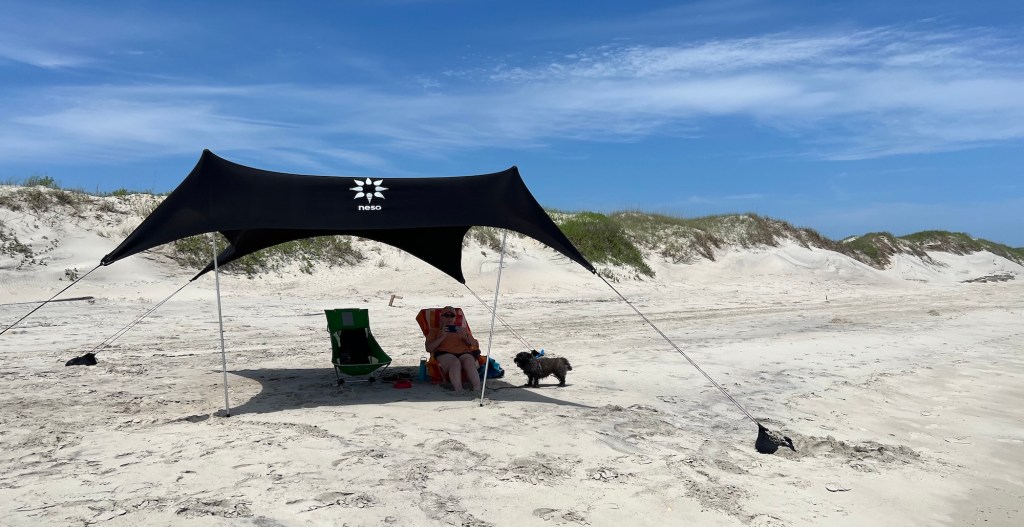
First, right the start of May we’re heading down to the island of Ocracoke—the southernmost island in the Outer Banks chain, accessible only by ferry (or very small plane). I’ll be down there for 2 weeks, for the first time in 3 years. The wife and I discovered Ocracoke almost by accident right at the start of the pandemic, less than a year after her major accident in summer 2019. We needed a quiet, calm getaway. We tried to book a property in Avon, NC but that fell through. We quickly re-booked in Ocracoke, taking a chance on the little island we knew little about, and it turned out great. So great we kept going back.
This will be our fourth stay on the island. The plan is to work remotely the first week, then take the second week off. Only… that’s not exactly how it will play out. After booking this trip, the launch of the “2.0” version of the countywide website was scheduled in the second week. So… the “vacation” week won’t be a full vacation. I’ll stay on the island, but I will assist with the launch.
And that’s the second big “countdown” coming up: the “One Franklin County” project, which will shut down more than 25 websites for about 14 agencies that will gather all their content on a single website with a single address for the first time… ever… in Franklin County, Ohio.
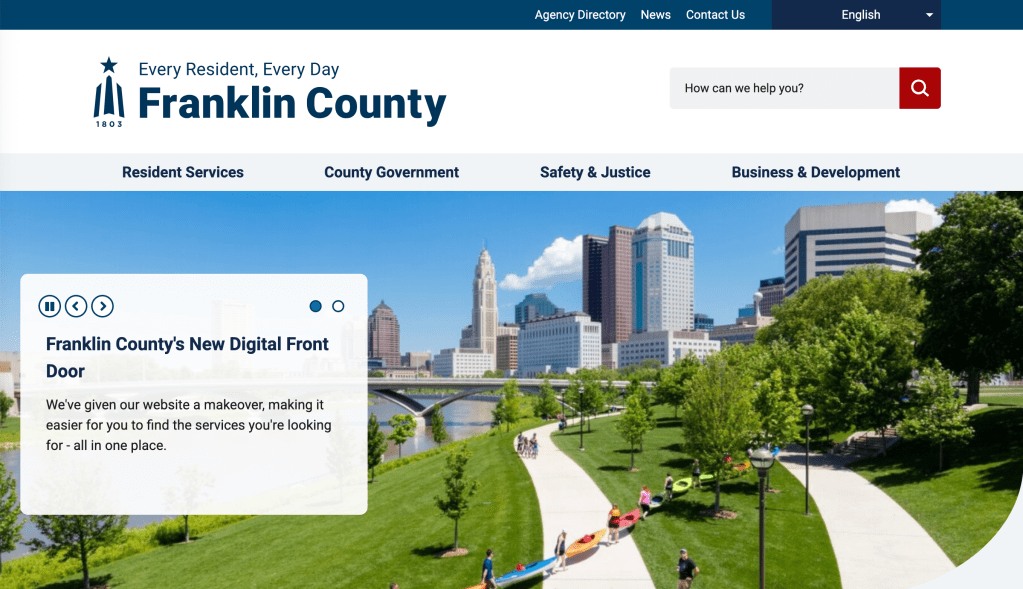
Our 1.0 effort, about a year ago, re-launched the “root” site as a kind of “service finder.” But this launch begins the slow process of dragging every agency into the fold, under the One Franklin County banner. Indeed, it’s far more than that. It’s a re-imagining of our public-facing website to be a digital services hub. So far, we’re focusing on content and a few minor services. But if we’re successful, it’ll turn into a service-focused platform centered on the needs of the public (not the vanities of elected officials).
As if that’s not enough for May, my third countdown is for the Code for America Summit 2025, set for the very end of May. That was a great event last year and we’re hoping for a good one in DC this year, too, despite the federal disaster in progress. It will be me and 3 compatriots from our GX Foundry team.
After all this, I may just need to go back to Ocracoke for June.
Email bankruptcy and calendar cleaning
Meanwhile, this weekend I finally did it. Again. I declared “email bankruptcy” for anything I haven’t handled since January 1 of this year. My unread count crested more than 1,000 in recent weeks so I knew this was coming. There’s no way I could get through all that and handle it. Or rather, there’s no way that would be a valuable exercise.
So if you emailed me something in 2024 or before and you haven’t gotten a reply… you won’t. Truth be told, I can barely keep up with Teams chats and posts in various channels, so email never had a chance.

Similarly, as I’ve been setting up and re-setting-up devices lately, I’ve discovered calendar syncing is a particular mess. This isn’t surprising, as so many events are recurring, yet have cancelations or re-schedules that mess up the patterns… making the presentation of an accurate, current calendar an exercise in database filters on top of filters on top of filters… what a mess.
So I deleted calendar entries older than about 18 months, and I hope that helps. I wish I could archive that stuff, but with Microsoft’s handling of “new” Outlook and our preventing the creation of PST files, it’s pretty much impossible to use offline archiving at this point. So the only option is to delete.
There’s definitely a part of me that wants to have a complete calendar record going back, well… indefinitely (in this case, nearly 6 years). But that’s asking a lot of my software and hardware tools, especially when I don’t really look back that far for anything. Email, on the other hand, I keep pretty much indefinitely. But our various systems are better equipped to handle that.
Anyway… raise a glass to digital spring cleaning.
Back to the bureaucrats

This week saw a pair of articles get traction in the digital government community:
- The Paperwork Reduction Act Created a Paperwork Explosion by Marina Nitze, author of Hack Your Bureaucracy and a broadly experienced digital government leader
- Truman’s Bureaucrats by Kevin Hawickhorst, analyst and writer of the original Eisenhower’s Bureaucrats, which I have referenced multiple times
Nitze’s piece is an expansion of ideas from Hack Your Bureaucracy and Recoding America, Jennifer Pahlka‘s book, first released nearly 2 years ago. And every citizen should read it. It’s wild how one single law, released in 1980 and updated in 1995 can hold back so much innovation in the federal government in particular. The only solution is a complete overhaul. Sadly, good governance isn’t available in Washington, DC these days, so things aren’t likely to change soon. However, this may be the perfect time to get everyone ready for a resurgence of good government in the years ahead. (Indeed, one hopes for a massive overhaul in Congress at the opening of 2027).
Hawickhorst also takes aim at the Paperwork Reduction Act, at least to start. But then he does another mind-blowing deep-dive into a mid-century revolution in government simplification (for the public), centered on a publication called Simplifying Procedures through Forms Control, a 1948 manual that accelerated government improvements, especially in paperwork.
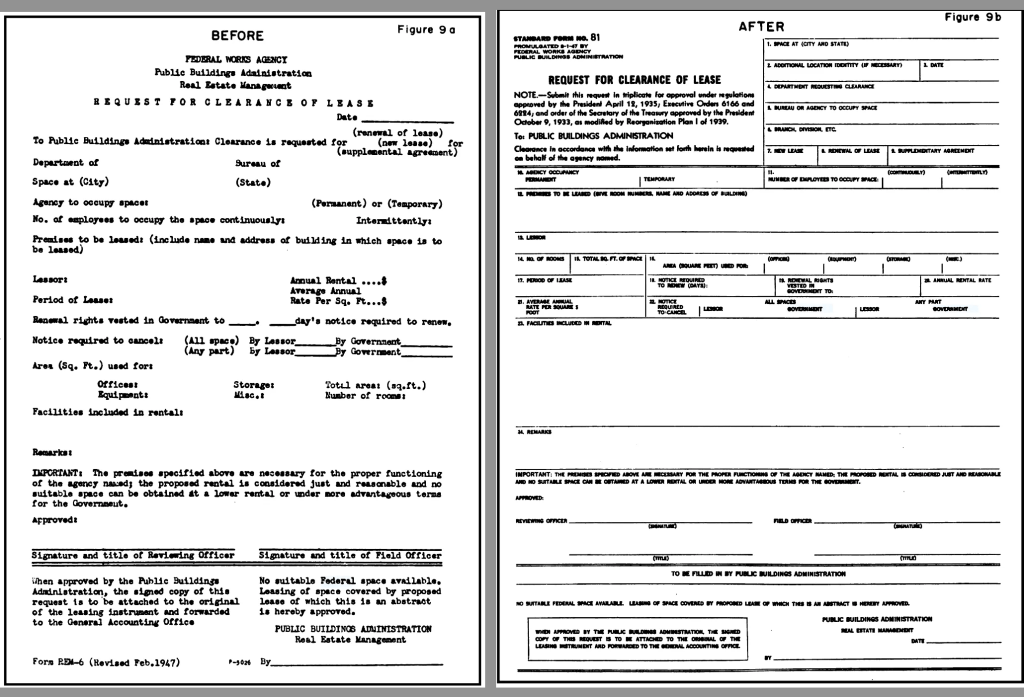
The title alone made me think of the FormFest event hosted by Code for America, the Beeck Center, and others over the past 2 years, and examples of forms reform (ha!) in Arizona and elsewhere. Fixing forms seems too simple to be worthwhile, but it turns out tiny improvements in basic services make a mountain of difference to the public. (And yes, even huge improvements, like the ones Civilla brought to Michigan’s 1,200-page monstrosity, are even more worthwhile!)
Today we have User Experience (UX) and Customer Experience (CX) and user research and all manner of metrics, and we think we invented it all. Nope. It’s all been done before. So let’s do it again.
New government / trust / communications series
Back when we started the GX Foundry site, fellow Substacker Will Hampton found us and we struck up a distant friendship. So I’ve kept tabs on his work in advising government teams on how best to pursue public-facing communications and what might be called “marketing” in a for-profit business. And Mr. Hampton is starting up a brand new multi-part series with advice for government communicators. The first post: Skepticism. Outrage. Misinformation. Let’s Talk About What Actually Builds Trust.
As I said on LinkedIn, I recommend you follow this new series. One of the things our own Sarah Gray says (to anyone in our county that will listen) is, “A ________ is not a communications strategy.” You can insert “website” or “newsletter” or “podcast” or “chatbot” or other tool in that blank and the statement remains 100% true.
As Will says in his intro piece, you can build trust. But it doesn’t happen without intentionality, a strategy, and follow-through. I’m looking forward to this series in the weeks ahead.
Linknotes
- HBR’s Idealist had a great episode this past week or so: The Conversations You Should Be Having with Your Manager. This is great content for staff, managers, and leaders to check out and consider. Building your career is not a passive activity—it’s a contact sport, and if you want to get anywhere, you’ll have to position yourself for growth. This is the way.
- Mike Masnick shared this LinkedIn post by writer E.B. (Liza) Boyd, talking about the limits of our thinking around what’s happening with young men in our culture right now. She posits the idea that young men aren’t being “left behind,” they are instead failing to “keep up” with changes in our culture—primarily the empowerment of women over the past 50+ years, and all the follow-on effects of that change. (Simple example: When I was young, my mother was not allowed to have a credit card in her own name.) This is in stark contrast to commentary from the likes of Scott Galloway, who beats the “young men are being left behind” drum all the time, and his take that men achieve their greatest value by being providers and protectors of others. (And by the way, I like a lot of what Scott Galloway has to say.) Boyd’s commentary is the first counter-narrative I’ve seen that carries real weight: that the crisis with men is not one of external forces preying upon the gender, but a lack of resourcefulness or creativity in male culture to adapt. I’m hoping this gets a broader exploration and discussion.
About this week’s header photo

Discover more from digitalpolity.com
Subscribe to get the latest posts sent to your email.
 digitalpolity.com