
January 27 – February 2
My “weeknotes” capture events, thoughts, and other items from the past week, mostly focused on work. Learn more about the weeknotes concept here.

Before we get into the weeknote proper, I just wanted to share my new post over the GX Foundry blog, focused on how a recent report from communications firm Edelman assesses public trust in corporations, nonprofits, and governments across 28 countries—including the United States. They also investigate how “grievances” play into trust.
I’m betting trust at the national level will only fall further in the next iteration of the report, once we have a full year of Trump 2.0 under our belts. But local governments are positioned very well to defend their better-than-national reputations, so long as they put Trust at the top of their mission statements.
And now on to the #weeknote…
A winter escape on a first (and last) cruise
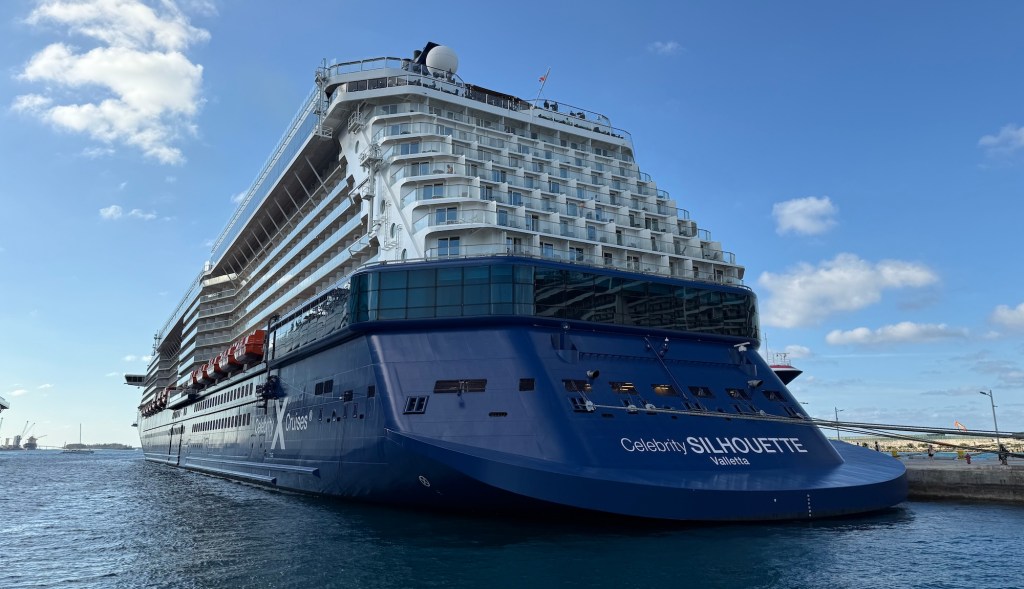
This past week was mostly a vacation. Following in the footsteps of David Foster Wallace, the wife and I headed south, out of this year’s unusually cold winter to Florida. We were determined, after watching too many Emma Cruises videos at home, to give cruising a try. Until this past week, neither of us had tried it. (Well, I spent one night on a cruise ship between Stockholm and Helsinki in the fall of 1992, but that was a lifetime ago and wasn’t a vacation.)
So we made plans to give it a go, and see if cruising was for us, or we would reach a conclusion similar to DFW’s. Just a lot shorter.
Here was the plan:
- Fly to Miami
- Catch a Brightline train from Miami to Fort Lauderdale
- Board a 4-day cruise at Port Everglades; make sure the cruise is a quality step or two above Carnival and will not be loaded with children or drunks
- Stop at Key West to explore
- Have a “sea day”
- Stop at Nassau, Bahamas to explore
- Return to Port Everglades and take another Brightline train south to Miami
- Stay in the South Beach neighborhood of Miami Beach for one night, to see some sights
- Fly home
So that’s what we did. Now some photos, then a conclusion.
A train, a cruise ship, Key West, Nassau, and back
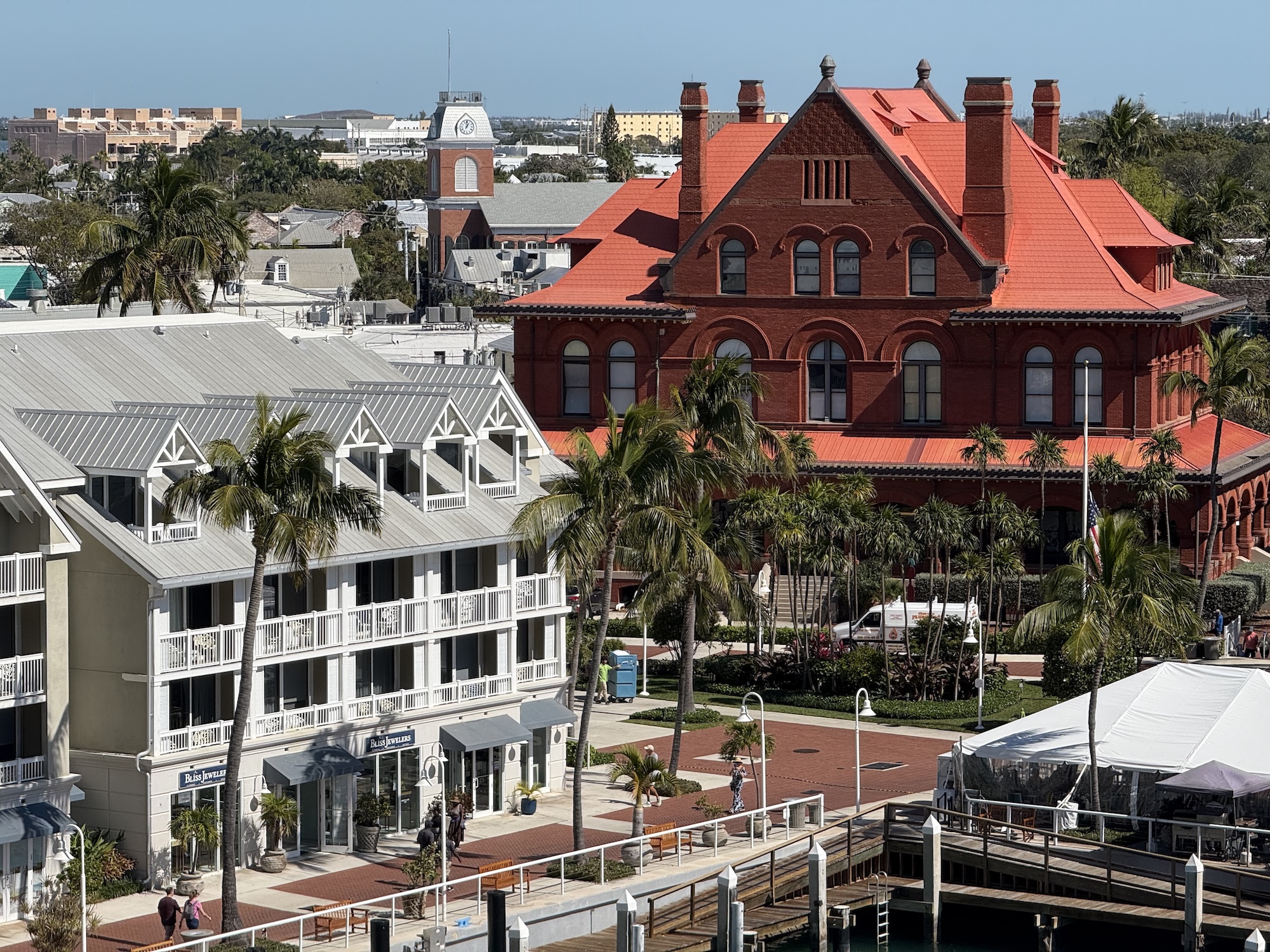
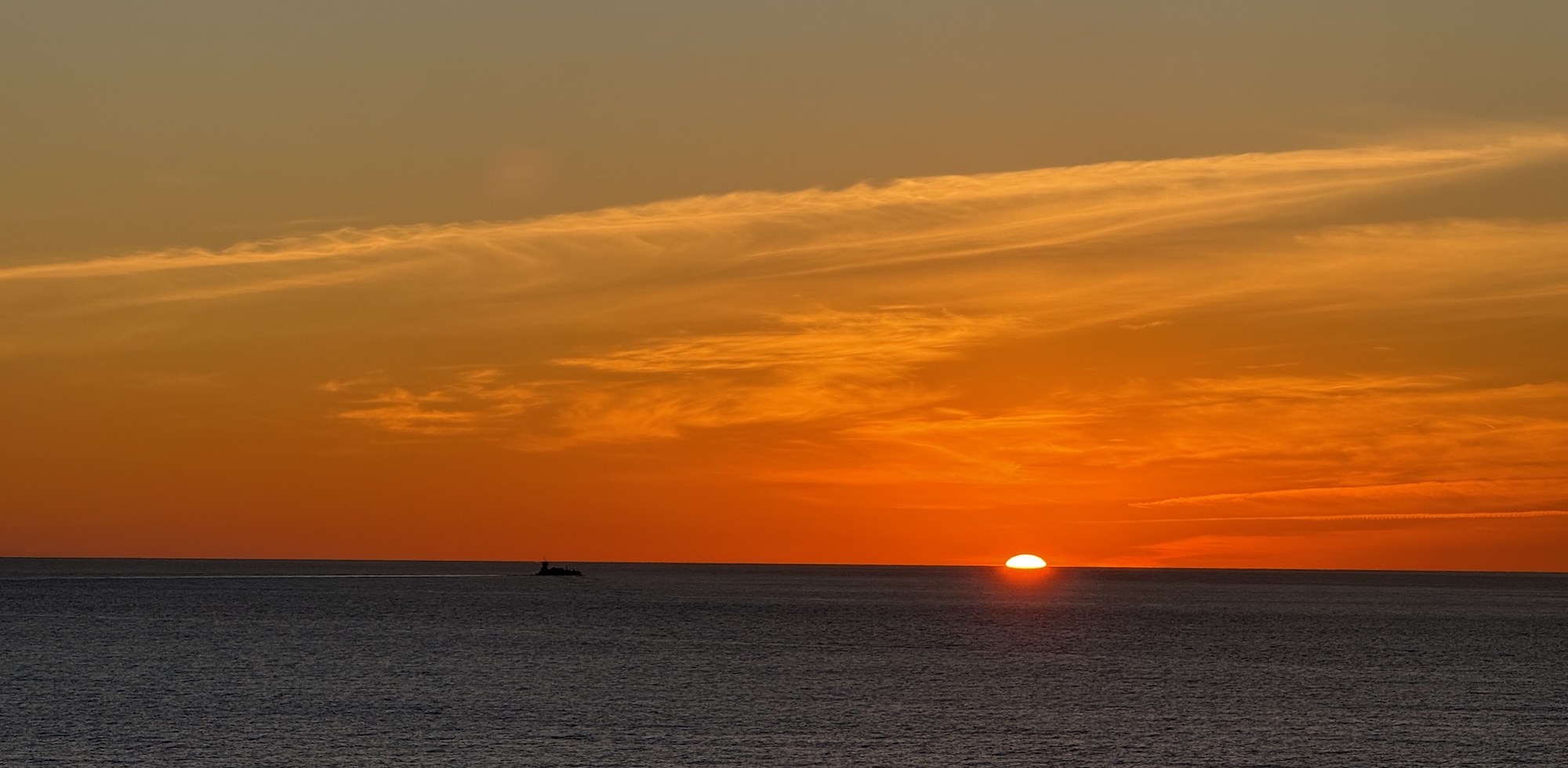
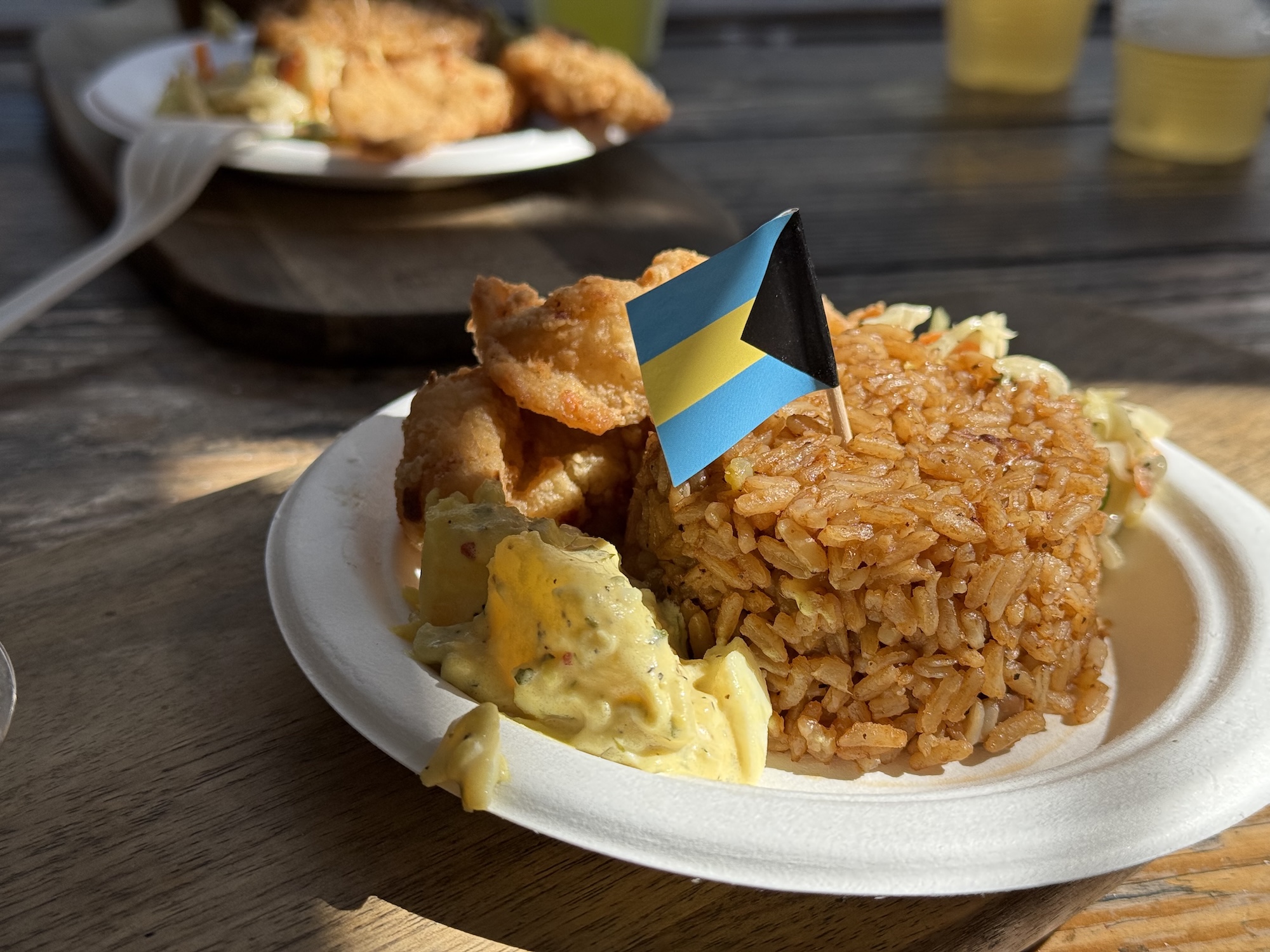
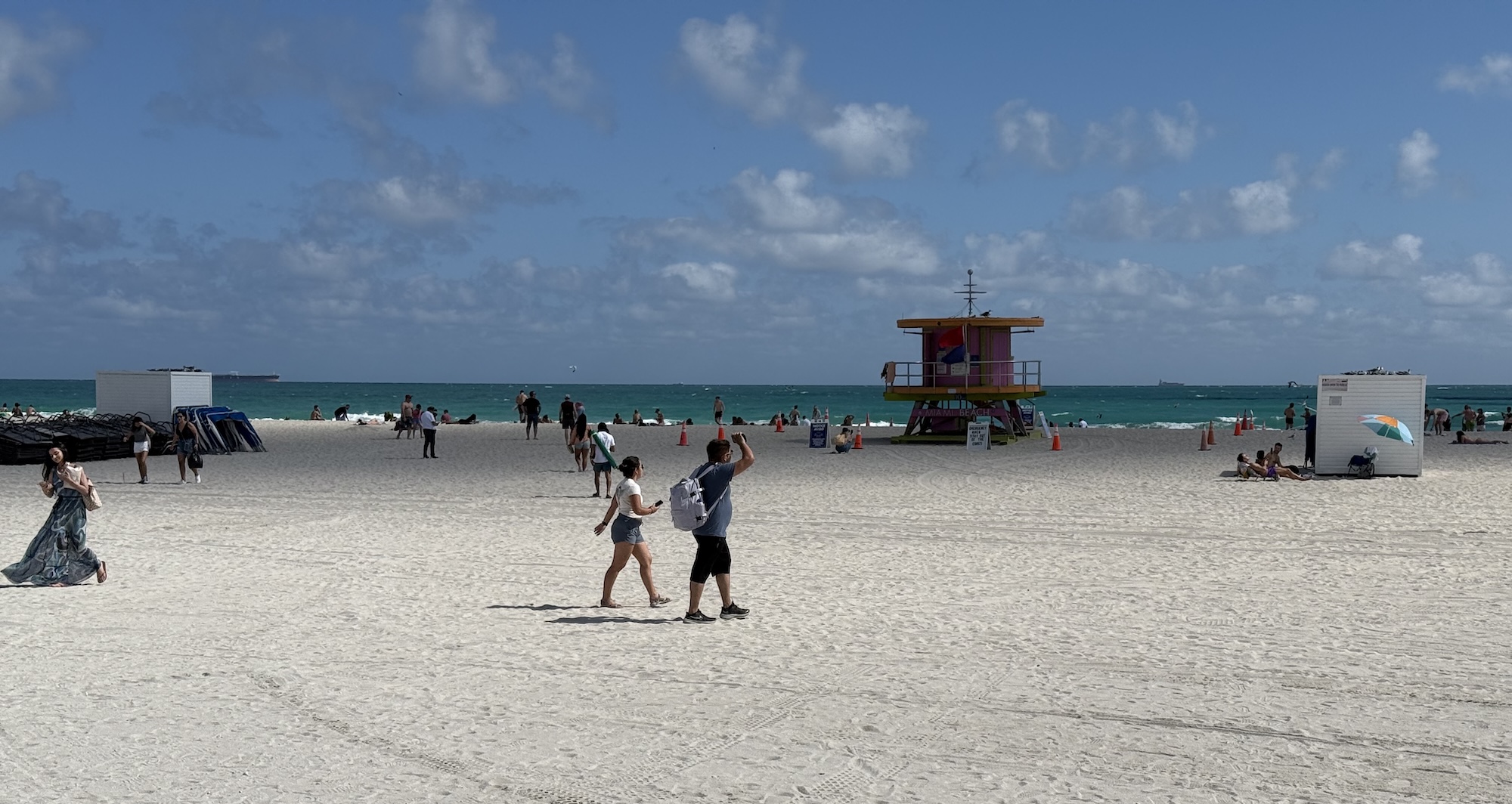

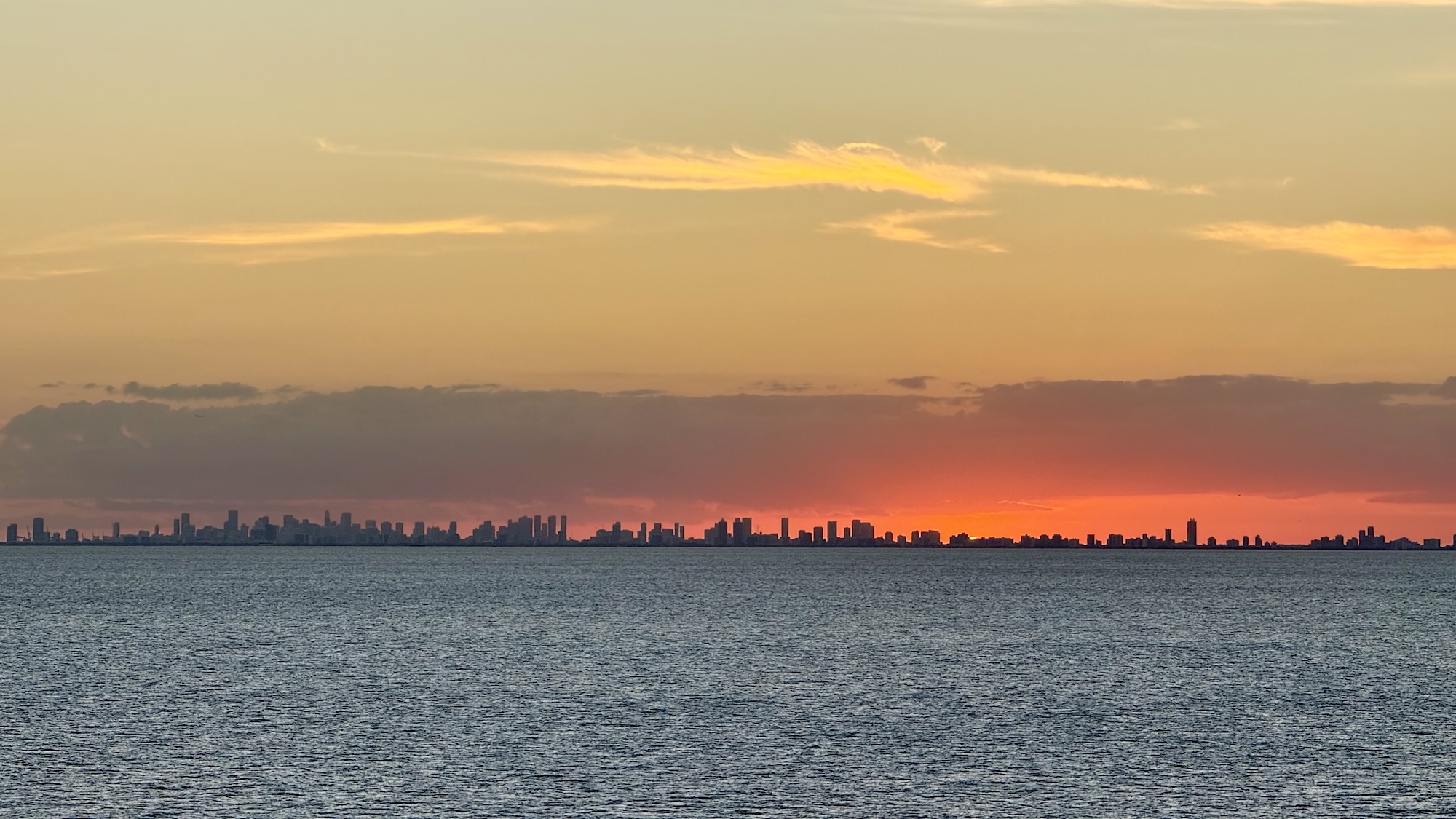

The weather was perfect throughout the trip — highs in the low/mid 70s with sun and a few clouds each day. Key West was a disappointment—it’s just a huge drinking and party town, and we couldn’t get in to see Hemingway’s house, as it was mobbed. Nassau was eye-opening, and about what I would expect for a nearly-third-world country living on tourism in the shadow of the United States and a dwindling agriculture base. Lovely people, but there’s a “wild west” desperation to the place that’s unsettling.
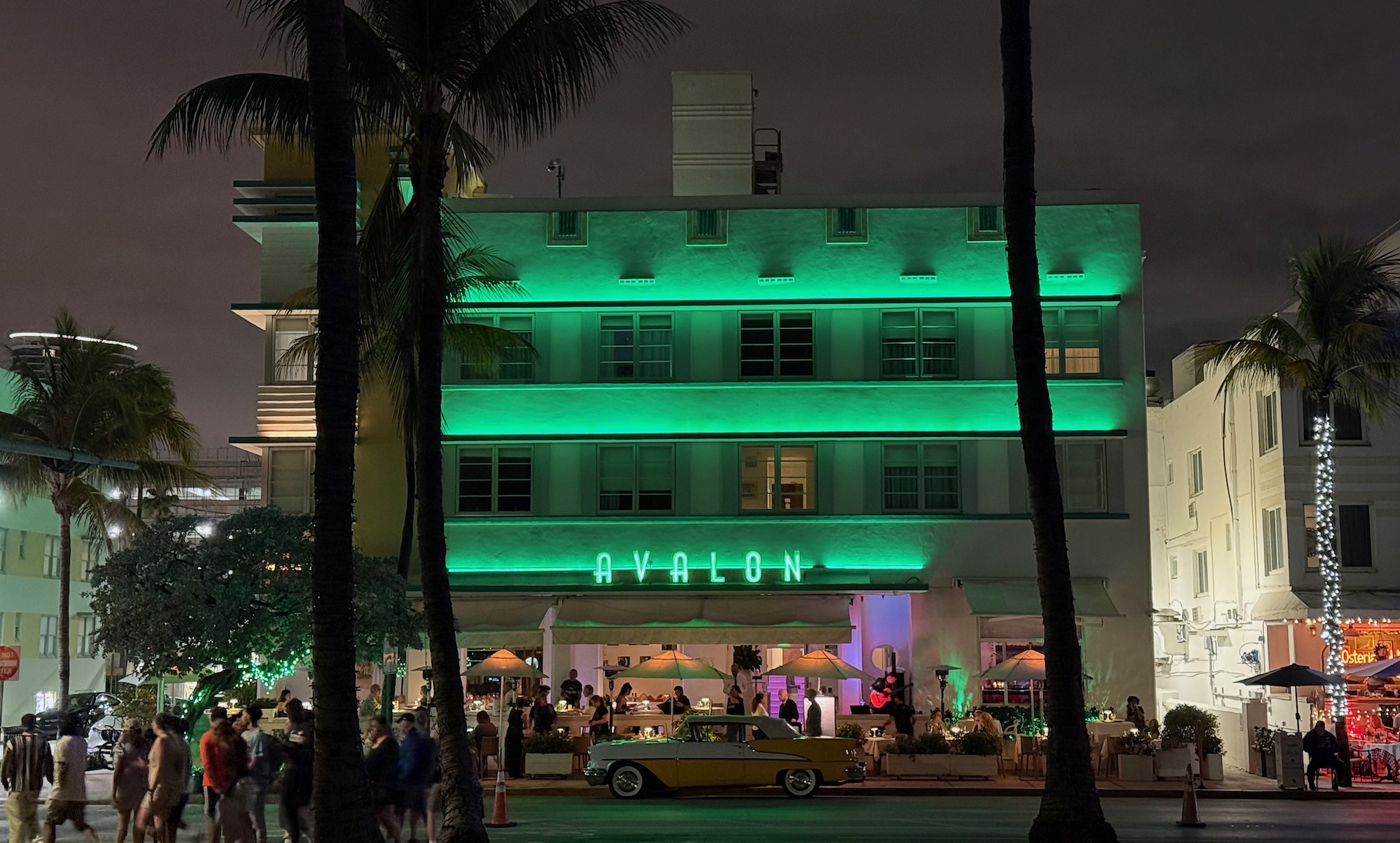
Art Deco in South Beach
Two notable highlights were the Brightline experience, which was remarkably good in every way. The stations even had a signature scent pumped into them that was a pleasant discovery, the trains were clean and attractive, and even the mobile app experience was great.
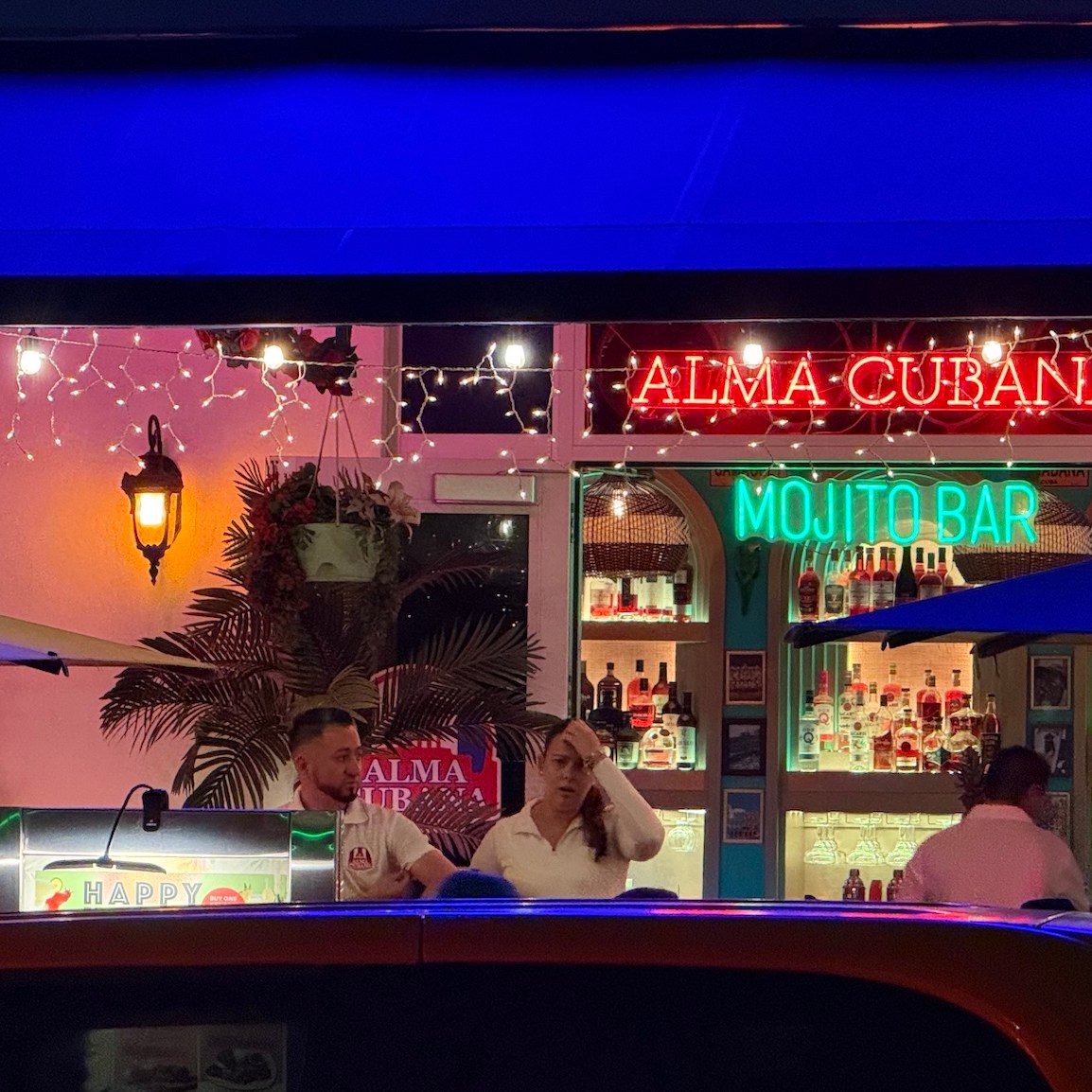
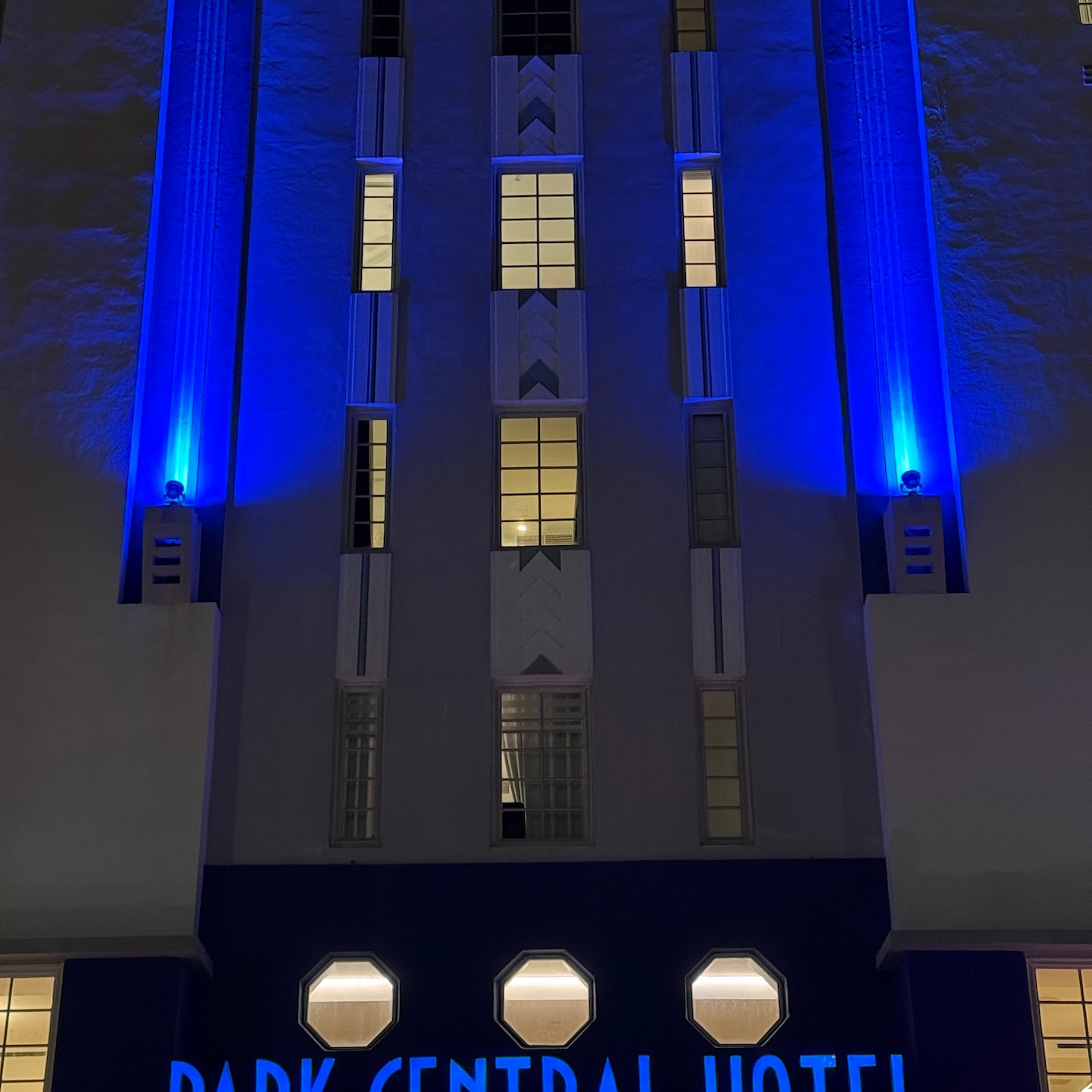
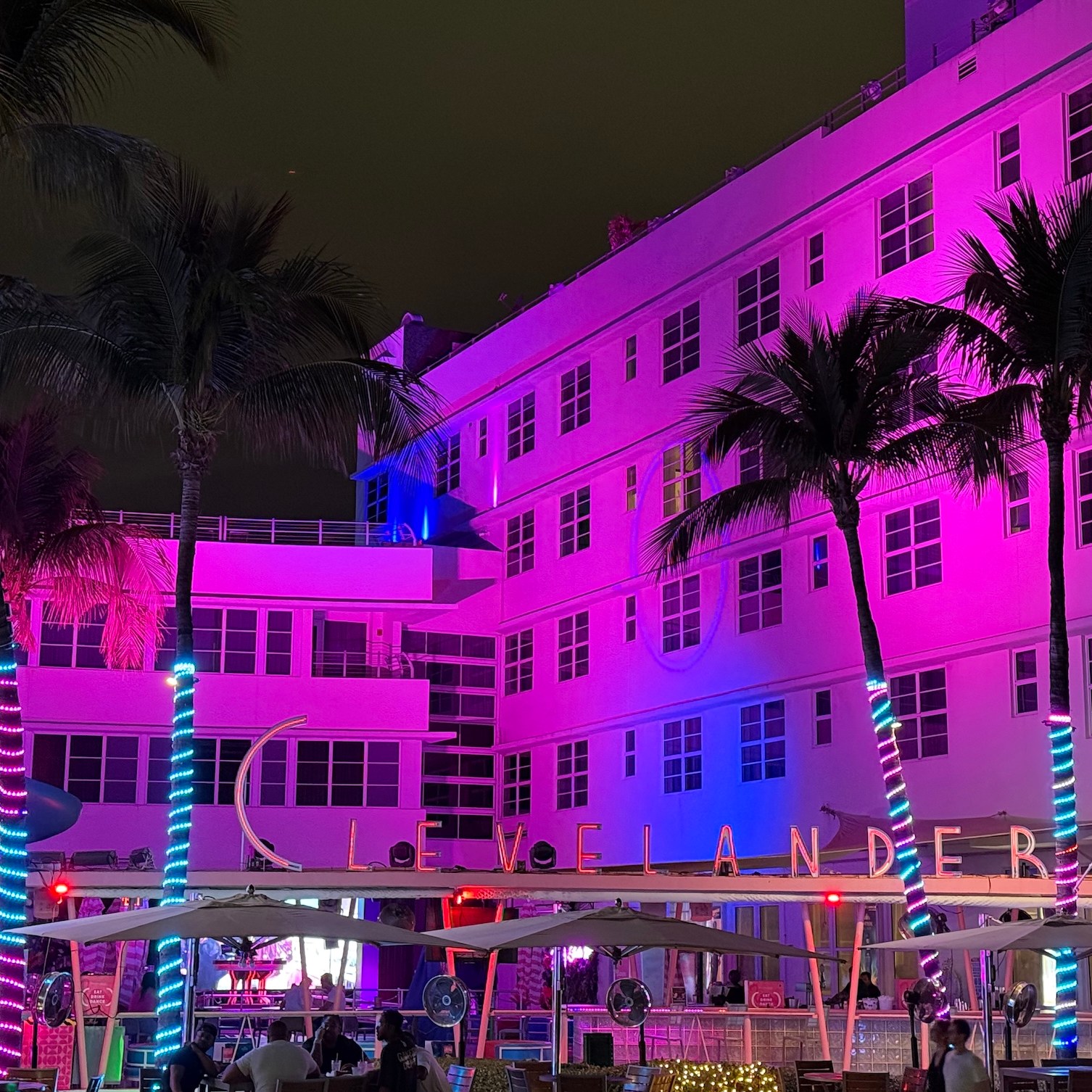
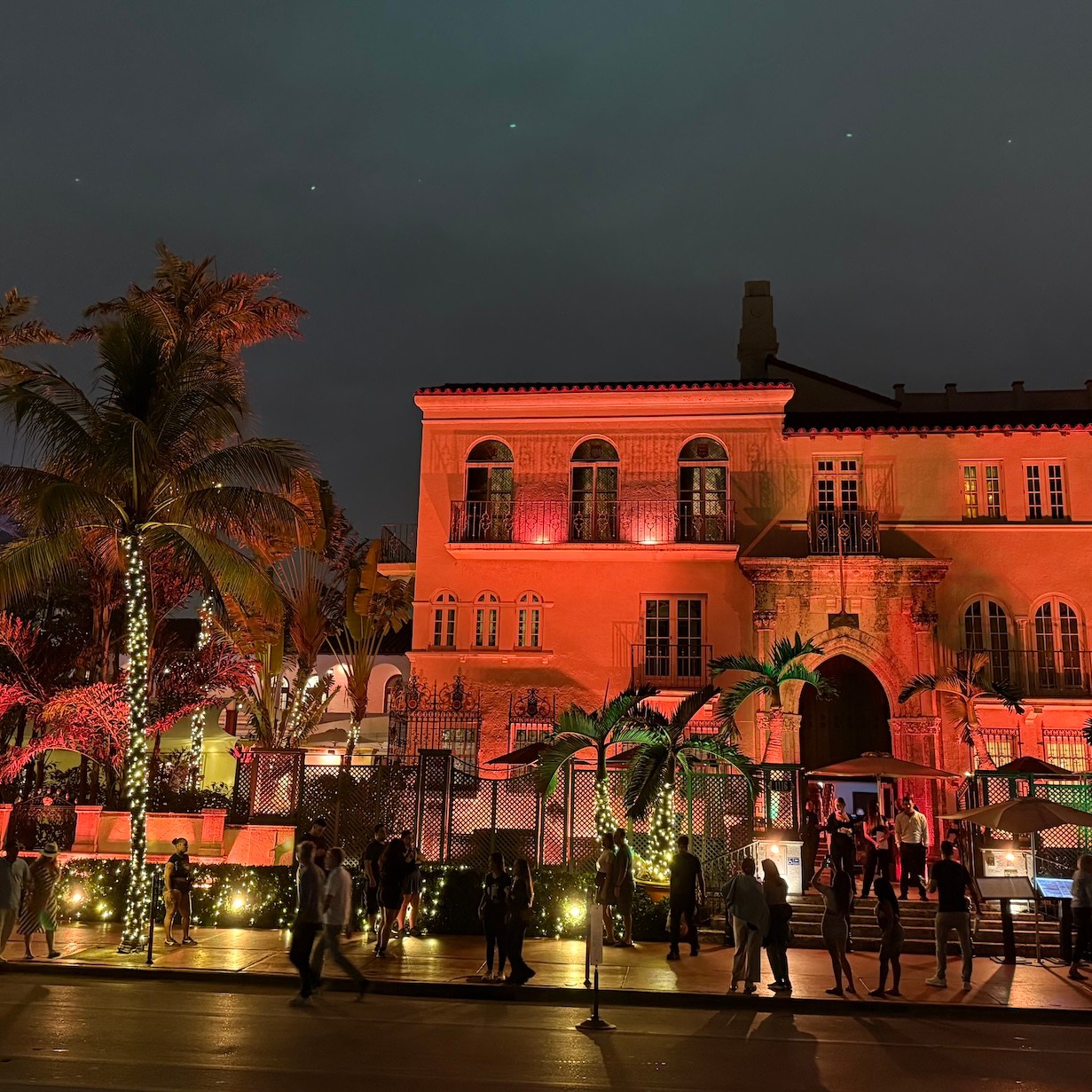
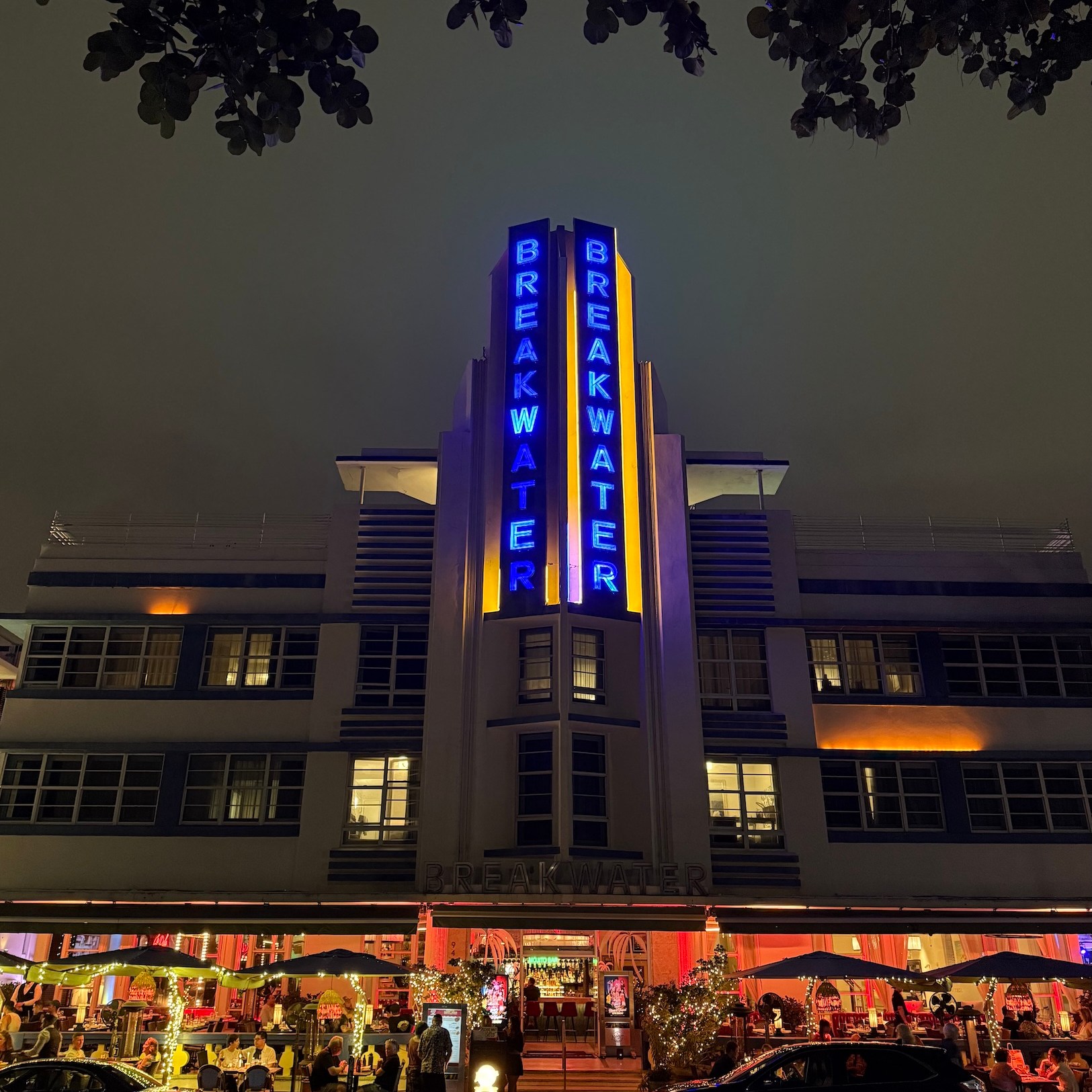
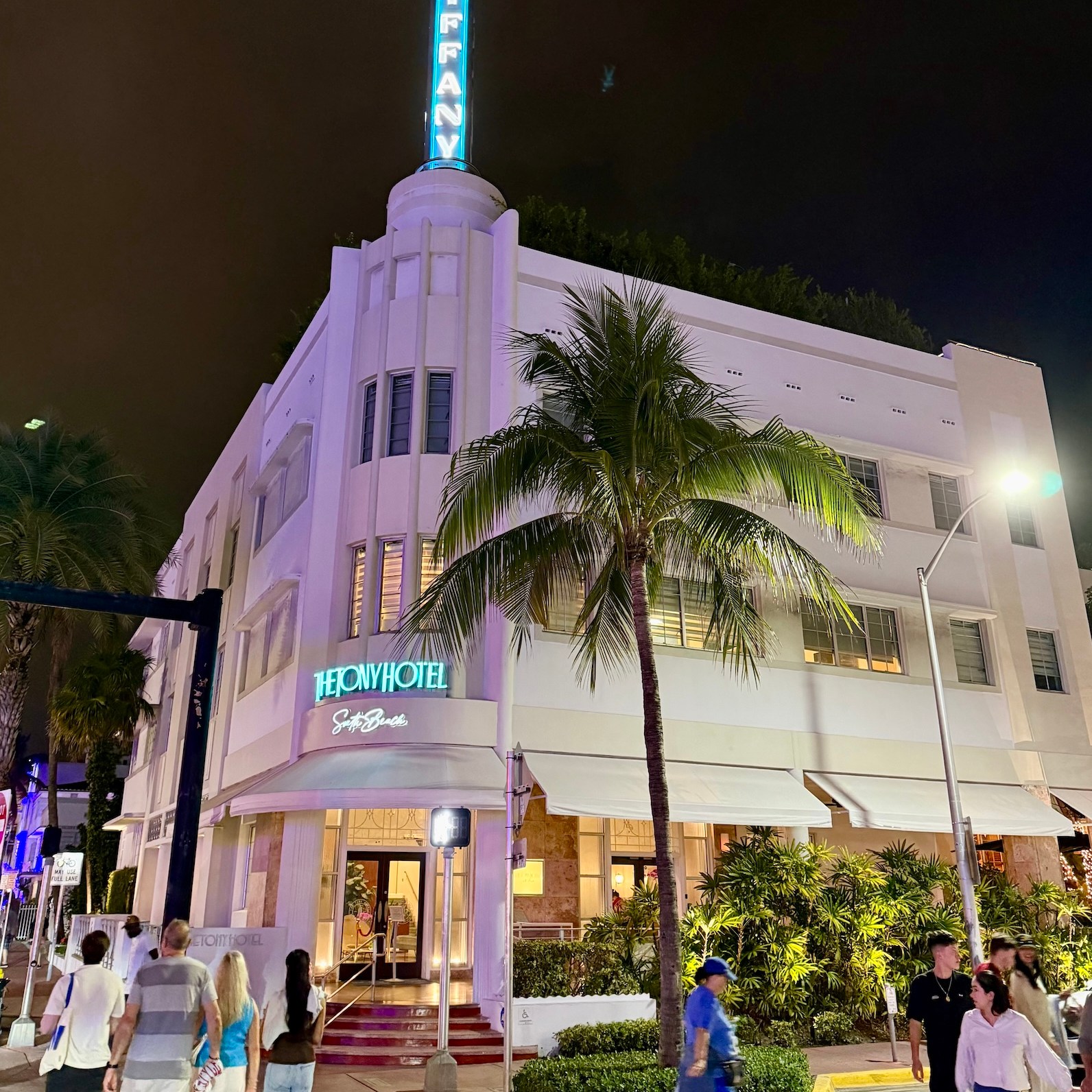
South Beach was another fascinating discovery. We stayed in a restored Art Deco hotel a block back from Ocean Drive and both walked out to the Atlantic and strolled with the throngs of people out on a Friday afternoon at the end of January. It was chaotic and loud and… probably pretty normal there. We didn’t like the noise or crowds, but it was great to get back out at night and see the neon lighting up the architecture.
Would we cruise again?
No. Well… that’s not entirely accurate. If friends or family wanted to do it and we were invited along on a nice-ish cruise line, yeah, we’d be willing to do a few days, mostly to hang out with people we haven’t seen in a while. But the overall experience just wasn’t our speed. The room was fine. The food was… available. The entertainment was mostly soloists or small bands blasting out music at ear-splitting volumes to fill the cavernous interior spaces of the ship, presumably to convince you you’re having a good time, dammit. There were more walking inebriates than we wanted to see.
But we’re glad we did it. It wasn’t a bad time, it just wasn’t a great time. The best part is we learned more about what works for us in a vacation—what we like and don’t like, so we can make better choices in the future. We know we like more quiet spaces if the goal is to relax. Or if we’re getting immersed in noise, it should be the hustle-and-bustle of a city doing it’s thing, not Forced Frivolity™. If we’re going somewhere as tourists, we want to see it like it really is day-to-day, not packaged up into something flashy or fake.
For example, you just can’t visit Venice from a cruise ship. You have to stay there, walk the streets, cross the canals, eat in the restaurants, and do it all in the morning, the afternoon, at night, and feel the rhythms of the city and see how the light changes, the tides rise and fall. A cruise ship cuts you off from experiencing a place.
Cruise ships are stunning, remarkable engineering achievements. But they are the Wonder Bread of travel, and we’re seeking the local, authentic French baguette.
Meanwhile… Can we call it fascism yet?
My week of vacation coincided with the second week of the disastrous Trump 2.0 administration, which may become a permanent administration if we don’t wake up and find ways to derail these attacks and bad-faith changes. I’m all for letting a mix of conservative and liberal ideas play out in policy and practice in government, as both sets of ideas and tendencies are sharpened when they come in contact with one another. Our society benefits from a vibrant marketplace of ideas making their cases for popular support.
But that’s not what this is. The only question I have is when can we call it “fascist” without being written off as kooky?
So what is fascism? Well, there are countless articles and think pieces out there, but I like the idea of going back to the well, to people that lived through the most recent fascist period in the West. Someone online shared a link this week to a 14-point list of telltale signs you’re dealing with fascism, sourced from none other than Italian writer Umberto Eco, who penned this essay for the New York Review of Books back in 1995: Ur-Fascism. (You can read the full essay, beautifully written, or just go to the Wikipedia summary.)
Eco grew up during World War II and saw the Italian fascists—an even clearer template for our modern time than HItler’s Nazi movement in some ways—rise to power. He also saw their demise as a resistance movement took Italy back from Mussolini and his acolytes at the tail end of WWII. His list of fascist assessments reads like a news summary of the past 10 years and especially the past 10 days.
The funny thing is, I don’t believe Trump himself is a fascist—at least not in his underlying intentions or understanding of the world. He’s using fascist tactics, but he doesn’t know it. It’s not an intentional deployment of the model. He’s just not a smart person by even the most generous definition, and definitely not a student of history. But he is a tightly-wound ball of knee-jerk reactions driven by what appears to be a lifelong case of narcissistic personality disorder. Fascist tactics line up nicely with a “charismatic” leader that takes power by grinding a lot of axes in full public view.
I’m still waiting for the mainstream media to figure it out and start calling a spade a spade. Of course, I might be waiting for that until the heat death of the universe. In the meantime, I’m keeping Eco’s list of 14 fascist properties close at hand, and share them when needed.
On the purge of federal data and websites
While away on vacation I shared a note on LinkedIn about the ongoing purge of data and even whole websites from federal agencies, in the wake of Trump’s insanely petty choices. The core thinking I shared:
Changing what an agency emphasizes or promotes to the public is pretty normal as administrations change—elected officials want to focus on different things during their administrations. That’s fine. Indeed, in the “marketplace of ideas,” it can be positive to go through waves of opposing ideas.
But the DEIA stuff could have been de-emphasized over the next couple months in some well-thought out redesigns that pushed Trump’s preferred messages to the forefront while keeping the legacy DEIA content in the background to appeal to the *literal majority* of Americans that benefit from the recognition those web pages afford.
This week in AI
The DeepSeek freak-out this week was frustrating in a few ways:
- It’s too soon for anyone, let alone corporations, to freak out to any degree with respect to AI in any context. It just isn’t that vital a technology in the real world yet. While the tech is real, the fantastical claims of Artificial General Intelligence are mere vaporware. NVIDIA’s stock valuation was outrageous, so it’s meteoric fall was inevitable. Everybody just needs to calm down.
- I’m not at all surprised LLM generative AI can be done cheaper and easier than American companies have suggested so far. Indeed, we should expect more efficiency development, not be surprised by it.
- Many commentators seem to forget or ignore China being a state-level enemy of ours. Anything a Chinese company does must be considered from that perspective. They could be straight-up lying about DeepSeek’s achievements of efficiency. And I have no doubt about OpenAI’s claims that DeepSeek ripped off parts of their tech to achieve what they’ve achieved here—the Chinese routinely steal our intellectual property and seek to undermine our culture and politics and business. (Although OpenAI having their stuff stolen is *chef’s kiss* a perfect comeuppance for them, given how much they’ve stolen from creators worldwide.
- Not enough attention is being given to the clear and present danger of DeepSeek—an obvious Chinese ploy to steal as much data as Americans are willing to turn over, just to get a few free compute cycles. Folks shouldn’t be uploading anything of actual value to DeepSeek in particular, and all AI companies are suspect anyway. Tread very, very carefully.
Meanwhile, Code for America shared a nice primer on AI technologies this week, great for folks in government that want to do some catching up. Worth a link and a look.
47 years later: The Blizzard of ’78
And now for something completely different and fun. This week marked the 47th anniversary of “The Blizzard of ’78“—a multi-state winter storm of epic proportions that socked-in millions, including a young me, living in the suburbs of Toledo, Ohio at the time. Despite being pretty darn young, I remember schools being closed for a week, piles and drifts of snow 15 feet high in places, and repeated power outages creating dark and cold homes. It was also fun.
I came across a couple videos by accident this week that reminded me of the anniversary. First was a 90-second promotional piece from a TV station in Toledo that covered the event:
And then a year ago was this 30-minute review of coverage, produced by the same station from a modern perspective. Tons of historic footage in the mix:
It was a helluva ride. I suspect we’ll never have a blizzard quite like that again. We’re better prepared today, especially in forecasting and sharing those forecasts. We have better street clearing tech, including GPS-driven solutions. But who knows. If you can stay safe, these kinds of events make for meaningful memories.
About the header photo
Discover more from digitalpolity.com
Subscribe to get the latest posts sent to your email.
 digitalpolity.com